
Why Truck Drivers Experience Tight Hips and How to Relieve Them
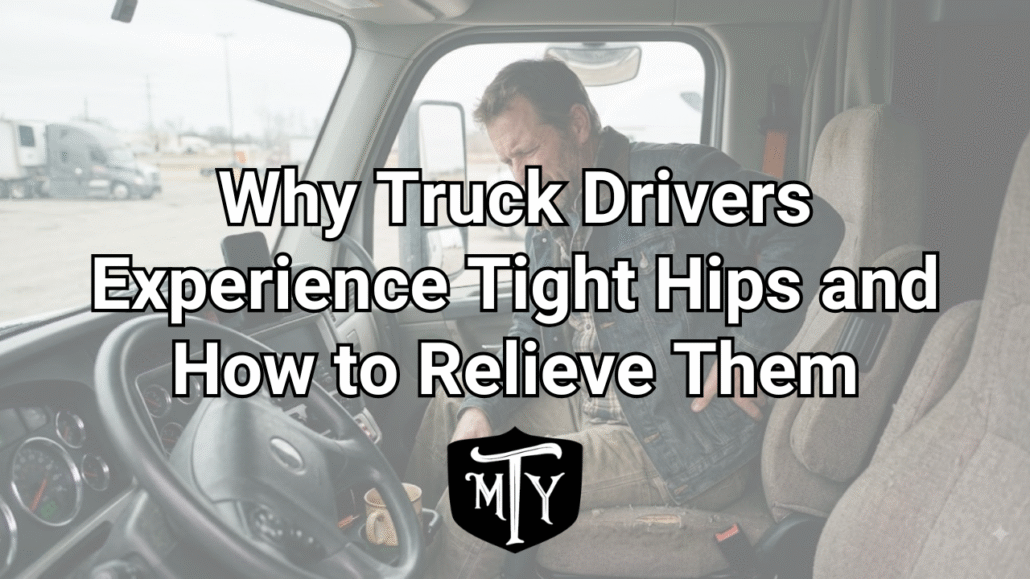
Why Truck Drivers Experience Tight Hips
If you’ve ever stepped out of your truck after a long drive and felt stiff, sore, or like your hips just wouldn’t cooperate, you’re not alone.
Tight hips are one of the most common complaints among professional drivers.
After hours of sitting behind the wheel, it’s normal to feel your hips tighten, your lower back ache, and your legs feel less mobile than when you started your day.
The good news?
Tight hips aren’t simply something you have to live with.
Understanding why it happens-and taking a few minutes each day to improve mobility-can make a huge difference in how you feel both on and off the road.
Your hips are designed to move.
When they spend most of the day in the same seated position, they begin to lose the flexibility and mobility they need to function properly.
Fortunately, a few simple habits can help reverse that stiffness.
Why Sitting Causes Tight Hips
Professional drivers spend much of their workday sitting.
While sitting may not feel physically demanding, your body is actually working against prolonged inactivity.
When you remain seated for long periods:
- Hip flexor muscles shorten.
- Glute muscles become less active.
- Blood circulation slows.
- The lower back begins to compensate for limited hip movement.
- Muscles lose flexibility over time.
The longer you stay in one position, the tighter those muscles become.
Eventually, even getting in and out of the truck can feel uncomfortable.
What Are Hip Flexors?
Your hip flexors are a group of muscles located at the front of your hips.
Their primary job is to help lift your knees and bend at the waist.
Because they’re constantly bent while sitting, these muscles rarely have an opportunity to fully lengthen during long driving days.
Over time, shortened hip flexors can affect your posture, walking pattern, and overall movement.
Tight Hips Affect More Than Your Hips
Many drivers assume hip tightness only causes discomfort in the hips.
In reality, it often creates problems throughout the body.
Restricted hip mobility can contribute to:
- Lower back pain
- Tight hamstrings
- Knee discomfort
- Poor posture
- Reduced balance
- Limited flexibility
- Muscle fatigue
When one area becomes tight, other parts of the body often compensate.
That’s why improving hip mobility frequently helps reduce discomfort elsewhere.
Why Mobility Matters for Drivers
Mobility is different from flexibility.
Flexibility refers to how far a muscle can stretch.
Mobility is your ability to move a joint comfortably through its full range of motion.
Healthy hips allow you to:
- Enter and exit the truck more easily
- Walk comfortably during breaks
- Maintain better posture
- Reduce strain on your lower back
- Move with greater confidence
Mobility supports both comfort and long-term health.
Signs Your Hips May Be Too Tight
You may notice:
- Stiffness after driving
- Difficulty standing upright immediately after getting out of the truck
- Lower back soreness
- Limited range of motion
- Tightness in the front of your hips
- Difficulty bending comfortably
If these symptoms sound familiar, your hips are asking for more movement.
Stretch Throughout the Day
One of the best ways to relieve hip tightness is by taking advantage of your rest breaks.
Even five minutes of movement can help.
Simple stretches include:
- Hip flexor stretch
- Standing quad stretch
- Figure-four stretch
- Seated spinal twist
- Gentle forward fold
You don’t need an entire workout.
Consistency matters far more than duration.
Strength Matters Too
Mobility improves even more when you strengthen the muscles supporting your hips.
Simple bodyweight exercises such as:
- Glute bridges
- Bodyweight squats
- Standing leg raises
- Side leg lifts
- Mini resistance band exercises
can help activate muscles that become inactive during long periods of sitting.
Strong muscles help support healthy movement.
Improve Your Sitting Posture
Your posture inside the truck affects your hips more than you might realize.
Try to:
- Sit evenly on both hips.
- Keep your feet comfortably positioned.
- Avoid leaning to one side.
- Adjust your seat to support your natural posture.
- Take opportunities to change positions when safe.
Small adjustments reduce unnecessary strain throughout the day.
Make Movement Part of Every Stop
Many drivers spend rest breaks sitting even longer.
Instead, use those few minutes to move.
Walk around your truck.
Stretch your hips.
Roll your shoulders.
Take a few deep breaths.
These short movement sessions improve circulation while helping your body reset before returning to the road.
Yoga Helps Restore Natural Movement
Yoga is one of the most effective ways to improve hip mobility because it combines stretching, strength, breathing, and mindful movement.
Regular yoga practice can help drivers:
- Increase flexibility
- Improve posture
- Reduce lower back pain
- Build core strength
- Release muscle tension
- Recover more effectively after long driving days
You don’t need to be flexible to start.
In fact, many people begin yoga because they’re not.
Small Daily Habits Make the Biggest Difference
You don’t need an hour-long mobility routine.
Five to ten minutes each day can produce noticeable improvements over time.
Start with:
- Stretching before driving
- Walking during breaks
- Gentle yoga before bed
- Mobility exercises each morning
These small habits help keep your hips moving the way they were designed to.
Final Thoughts
Tight hips may be common among truck drivers, but they don’t have to become part of your everyday life.
By understanding how prolonged sitting affects your body and taking a few minutes each day to improve mobility, you can reduce discomfort, improve posture, and move with greater ease.
Healthy hips make climbing into the cab easier, walking more comfortable, and long days behind the wheel less physically demanding.
Because every mile feels better when your body moves better.
You May Also Like
1️⃣ Want More Simple Movements You Can Do in the Truck?
Read: 5 Reasons You Should Take Regular Driving Breaks & Move More!
External resource: https://www.cdc.gov/physicalactivity/basics/index.htm
2️⃣ Struggling With Low Back Pain on Long Hauls?
Read: Improved Posture: A Truck Driver’s Secret Weapon Against Back Pain
External resource: https://www.spine-health.com/wellness/ergonomics
3️⃣ Want to Sleep Better on the Road?
Read: Sleep Well Drive Well: A Trucker’s Guide to Better Sleep on the Road
https://www.mothertruckeryoga.com/2024/03/05/truckers-guide-better-sleep/
External resource: https://www.sleepfoundation.org
4️⃣ Need Hydration Help?
Read: Hydration Hacks for Drivers: Stay Energized This Summer
External resource: https://www.mayoclinic.org/healthy-lifestyle



Leave a Reply
Want to join the discussion?Feel free to contribute!