
Staying Active During DOT Breaks: Simple Movement for Professional Drivers
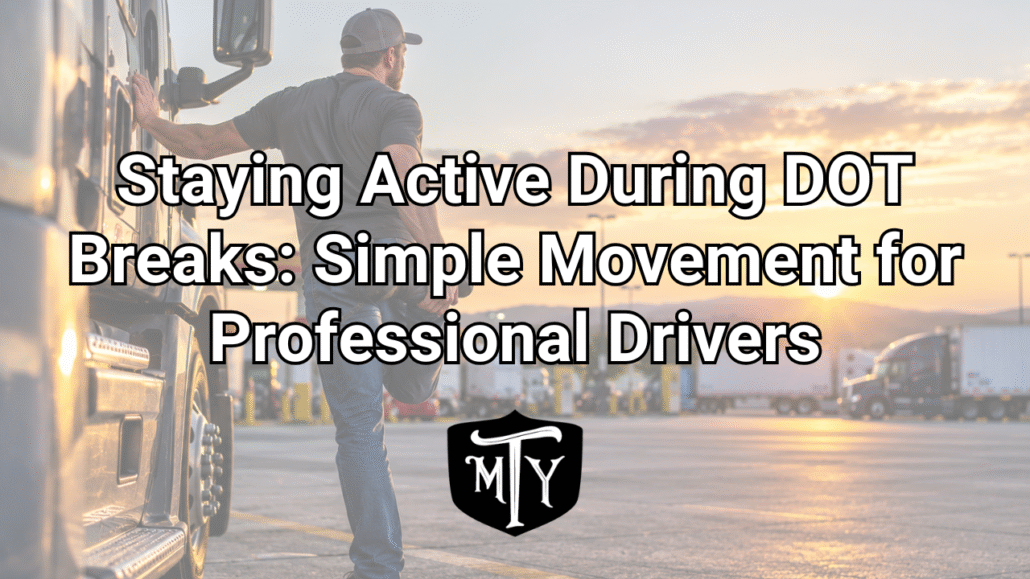
When you’re a professional driver, your day can involve a whole lot of sitting.
You sit behind the wheel.
You sit while waiting for a load.
You sit while waiting at a dock.
You sit during meals.
And sometimes, by the time you finally get a chance to take a break, the last thing you feel like doing is moving.
I get it.
When you’ve been driving for hours, getting out of the truck can feel like a chance to just sit somewhere else.
But your DOT breaks can also be an opportunity to give your body some much-needed movement.
You don’t need a gym.
You don’t need a full workout.
You don’t even need a lot of space.
A few minutes of walking, stretching, and simple movement can help break up long periods of sitting and give your body a chance to move.
And when you’re on the road for a living, those little moments can add up.
Why Movement Matters for Professional Drivers
Driving requires focus, patience, and long periods of sitting in one position.
Over time, that can leave your body feeling stiff and uncomfortable.
You may notice it in your:
- Lower back
- Hips
- Shoulders
- Neck
- Legs
- Chest
You might climb out of the truck and feel like your body needs a minute just to remember how to move.
That’s your reminder.
Your body was designed to move, not stay in one position for hours at a time.
Your DOT breaks give you an opportunity to change that pattern.
Instead of thinking of your break as simply time away from driving, think of it as a chance to check in with your body.
What feels tight?
What feels stiff?
What needs movement?
Then give yourself a few minutes to address it.
You Don’t Need a Full Workout
One of the biggest misconceptions about staying active is that it has to look like exercise.
It doesn’t.
For a professional driver, movement might simply mean walking around the truck stop.
It might mean rolling your shoulders.
It might mean stretching your calves.
It might mean doing a few gentle squats next to your truck.
It might mean standing tall and taking a few deep breaths.
The goal isn’t to turn your break into a fitness class.
The goal is to interrupt long periods of sitting.
That’s something almost every driver can work into their day.
Start Your DOT Break With a Walk
Walking is one of the simplest ways to get moving.
When you stop for your break, take a few minutes to walk.
Walk around the parking area when it’s safe.
Walk inside the truck stop.
Walk while you make a phone call.
Walk before you grab your food.
It doesn’t have to be fast.
It doesn’t have to be far.
Just move.
After hours of sitting, even a short walk can feel good.
And you may notice that your body feels different when you get back into the driver’s seat.
Stretch Your Hips
Your hips spend a lot of time in a flexed position while you’re sitting behind the wheel.
That can leave them feeling tight.
Try a simple standing hip stretch during your break.
Stand tall.
Take one foot back.
Keep your chest lifted.
Gently shift your weight forward until you feel a comfortable stretch through the front of the hip.
Hold for several comfortable breaths.
Then switch sides.
Don’t force the stretch.
You don’t need to push into pain to get the benefit of movement.
Just give your body a chance to change positions.
Give Your Shoulders Some Attention
Your shoulders can take a lot of tension during a long drive.
Especially when you’re stressed.
Try this simple reset:
Roll your shoulders slowly backward several times.
Then roll them forward.
Next, gently bring your shoulder blades back and down.
Relax.
Take a breath.
Repeat.
It’s simple, but sometimes simple is exactly what you need.
You can also gently turn your head from side to side, staying within a comfortable range of motion.
The goal is movement, not forcing a stretch.
Wake Up Your Legs
Your legs spend a long time in a relatively fixed position while you’re driving.
Once you’re safely parked, give them a chance to move.
Try a few simple movements:
Calf raises: Stand near something stable if needed and slowly rise onto your toes. Lower back down.
Bodyweight squats: If they feel comfortable for you, perform a few controlled squats.
Marching in place: Lift one knee, then the other, at a comfortable pace.
Ankle circles: Lift one foot slightly and slowly circle the ankle. Switch sides.
You don’t need to do dozens of repetitions.
A few controlled movements can simply remind your body that it’s time to move again.
Don’t Forget Your Back
If you’ve spent hours sitting, your back may be one of the first places you notice stiffness.
A simple standing movement can help you change positions.
Stand tall with your feet about hip-width apart.
Place your hands on your hips or across your chest.
Take a comfortable breath.
Gently move your upper body through a small range of motion.
You can also try a gentle standing side stretch by reaching one arm overhead and leaning slightly to the opposite side.
Keep the movement comfortable.
Your break isn’t the time to force your body into a deep stretch.
Think mobility, not punishment.
Turn Your Break Into a Body Check-In
Here’s something else you can try.
Instead of automatically reaching for your phone as soon as you park, take 30 seconds to check in with your body.
Ask yourself:
Where am I feeling tension?
What feels stiff?
Have I moved enough today?
What does my body need right now?
Maybe your shoulders need movement.
Maybe your legs need walking.
Maybe your hips need stretching.
Maybe you need water.
Maybe you’re more tired than you realized.
Learning to notice what your body is telling you is an important part of driver wellness.
A Simple DOT Break Movement Routine
If you want something easy to remember, try this:
The 5-Minute Driver Reset
1 minute: Walk
Walk at a comfortable pace.
1 minute: Shoulders
Roll your shoulders, move your arms, and gently release tension.
1 minute: Legs
Try calf raises, marching, or a few comfortable squats.
1 minute: Hips
Perform a gentle standing hip stretch on both sides.
1 minute: Breathe and reset
Stand tall, take several comfortable breaths, and check in with how you’re feeling.
That’s it.
Five minutes.
You don’t need special equipment.
You don’t need a gym.
You just need a few minutes and enough space to move safely.
What If You Don’t Have Five Minutes?
Then start with one.
Seriously.
One minute is better than nothing.
Walk for one minute.
Roll your shoulders for one minute.
Stretch your calves for one minute.
Get out of the truck and move around.
Don’t let the idea that you need a perfect workout stop you from doing something small.
Driver wellness isn’t about doing everything perfectly.
It’s about finding realistic ways to take care of yourself within the life you actually live.
And life on the road requires realistic solutions.
Make Movement Part of Your Routine
The easiest wellness habits are usually the ones that fit naturally into something you’re already doing.
Your DOT break is already part of your driving day.
So use that time as a reminder.
Park.
Get out.
Move.
Breathe.
Check in.
Then get back to your day.
You don’t have to make every break a workout.
Some breaks should simply be about eating, resting, making a phone call, or taking care of whatever you need.
But when you have a few extra minutes, give your body some attention too.
Your future self may thank you.
Small Movement Adds Up
It’s easy to think that a few minutes won’t make a difference.
But think about how many breaks you take over a week.
Now imagine adding just a few minutes of movement to each one.
That’s a lot more movement than doing nothing.
And you don’t have to wait until your body hurts before you start paying attention to it.
Movement can be part of prevention and maintenance.
It’s a way of saying:
I’m taking care of the body that’s carrying me through this job.
Because your truck may be built to handle thousands of miles.
But your body deserves maintenance too.
Your Break Is More Than a Stop
As a professional driver, your DOT breaks are an important part of your workday.
They’re time to step away from the wheel.
They’re time to reset.
And they can also be an opportunity to give your body some movement after hours of sitting.
So the next time you pull over for a break, don’t automatically think:
“I need to sit down.”
Ask yourself:
“What does my body need?”
Maybe the answer is rest.
Maybe it’s food.
Maybe it’s water.
Maybe it’s a walk.
Maybe it’s a few stretches.
Maybe it’s all of the above.
There’s no one perfect routine for every driver.
The goal is to find small movements that work for you and your schedule.
Because staying active on the road doesn’t have to mean spending an hour at the gym.
Sometimes, it starts with simply getting out of the truck.
Road Tested. Trucker Approved.
You May Also Like
Why Stretch Breaks Make Truckers Safer (and 5 You Can Do Anywhere)
Stretch breaks are essential for truckers to reduce fatigue, improve alertness, and lower accident risk by keeping muscles and mind active.
👉 https://www.mothertruckeryoga.com/2025/09/10/driver-stretch-breaks/
🔗 For further reading, check out “How Stretching Improves Your Trucking Performance” from https://highwaydriverleasing.com/2024/07/21/blog-how-stretching-improves/
Beat Trucking Fatigue: Simple Yoga Tools to Improve Sleep for Drivers
Practicing simple yoga and sleep hygiene helps truck drivers overcome fatigue, improve sleep quality, and perform safely behind the wheel.
👉 https://www.mothertruckeryoga.com/2025/08/13/yoga-for-trucker-sleep-and-fatigue/
🔗 External resource: “Driver Fatigue on the Job” from https://www.cdc.gov/niosh/motor-vehicle/driver-fatigue/ about managing fatigue and sleep risks.
https://www.cdc.gov/niosh/motor-vehicle/driver-fatigue/
The Mental Load of Trucking: How Yoga Supports Mental Health for Truckers
Yoga offers powerful tools to reduce stress, relieve anxiety, and support emotional wellbeing for drivers dealing with the mental load of life on the road.
👉 https://www.mothertruckeryoga.com/2025/08/06/yoga-for-mental-health-truckers/
🔗 For related insights, see “Sleep Resources” from https://www.cdc.gov/sleep/resources/
The Ultimate Truck Driver’s Guide to Managing and Relieving Back Pain Naturally
Addressing back pain naturally through posture, movement, and mobility routines can help truck drivers stay healthy, comfortable, and pain-free.
👉 https://www.mothertruckeryoga.com/2025/06/26/truck-driver-back-pain-relief-guide/
🔗 See “The Top 10 Stretches for Truck Drivers to Keep Their Bodies Pain-Free on Long Hauls” from https://www.allcomins.com/blog/the-top-10-stretches-for-truck-drivers-to-keep-their-bodies-pain-free-on-long-hauls



Leave a Reply
Want to join the discussion?Feel free to contribute!