
The Hidden Health Risks of Sitting Behind the Wheel All Day
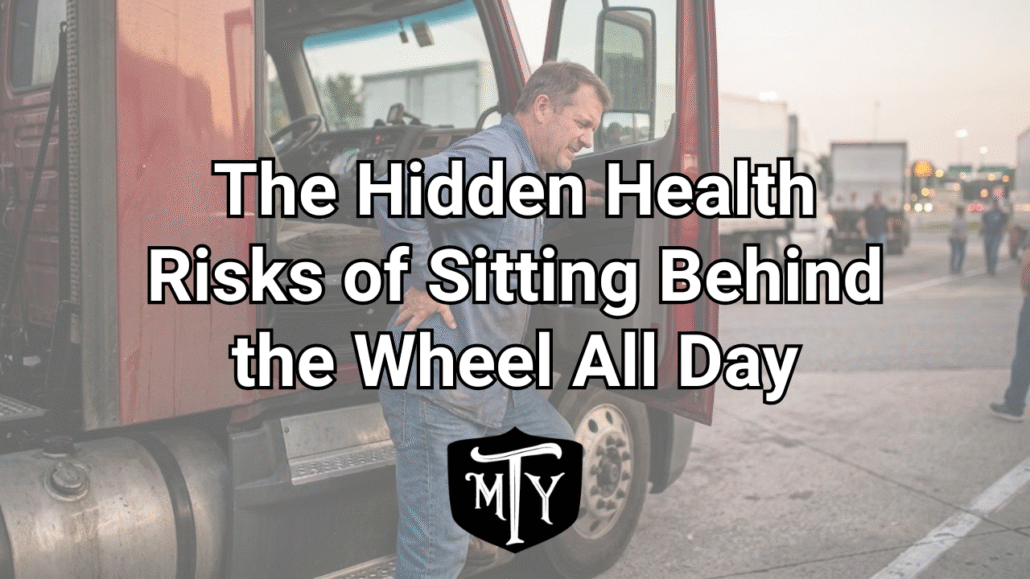
health risks of sitting for truck drivers
If you drive a truck for a living, you already know that sitting is part of the job.
Hours behind the wheel.
Miles of highway.
Long stretches between stops.
Sometimes you may barely get out of the driver’s seat before it’s time to get moving again.
And while sitting might seem harmless because you’re not physically exerting yourself, your body doesn’t necessarily see it that way.
The human body was designed to move.
Truck drivers, however, often have to spend eight, ten, or even more hours a day sitting in one position. Over time, that lack of movement can affect much more than just your back.
It can influence your circulation, muscles, posture, energy, stress levels, and cardiovascular health.
The good news?
You don’t have to completely change your career or spend hours at a gym to start taking better care of your body.
Small movements throughout the day can make a meaningful difference.
Let’s talk about what long hours of sitting can do to your body and what you can realistically do about it while you’re on the road.
Why Sitting for Long Periods Can Be Hard on Your Body
When you’re sitting behind the wheel for hours, your body is staying in a relatively fixed position.
Your hips remain bent.
Your legs stay in one position.
Your shoulders may stay forward.
Your hands remain on or near the steering wheel.
Your spine can gradually settle into whatever posture your seat encourages.
The longer you stay there without changing position, the less opportunity your body has to move through its normal range of motion.
This doesn’t mean that sitting is automatically harmful.
The bigger issue is prolonged, uninterrupted sitting.
When movement becomes limited for hours at a time, your muscles aren’t working the way they do when you’re walking, stretching, or changing positions regularly.
That’s one reason movement breaks are so important for professional drivers.
Your Circulation Needs Movement
One of the biggest concerns with prolonged sitting is reduced movement of the lower body.
When you’re walking, your leg muscles are regularly contracting and relaxing. That movement helps support normal circulation.
When you’re sitting for a long period, your legs aren’t getting the same level of muscular activity.
You might notice this as stiffness or that heavy, sluggish feeling when you finally step out of the truck.
Regular movement breaks can help get your body moving again.
You don’t need a complicated workout.
Walking around your truck.
Taking a few gentle stretches.
Moving your ankles.
Standing up and changing positions.
These small actions can help break up long periods of inactivity.
For truck drivers, the goal isn’t necessarily to turn every rest stop into a gym.
It’s to stop thinking of movement as something that only happens during a workout.
Movement can happen throughout your entire day.
Your Heart Health Matters, Too
Here’s where the conversation becomes bigger than back pain.
Physical inactivity is associated with several health concerns, including cardiovascular health.
Truck driving can already come with long hours, irregular schedules, stress, limited healthy food options, and disrupted sleep.
When prolonged sitting gets added to that mix, it becomes even more important to look for realistic opportunities to move.
According to the Centers for Disease Control and Prevention, regular physical activity can provide important health benefits and reduce the risk of several chronic health conditions.
You can find more information here:
https://www.cdc.gov/physicalactivity
The key is to make movement realistic.
You don’t need to become a marathon runner.
You don’t need to spend an hour lifting weights every morning.
You need to find ways to move more consistently within the reality of your job.
Your Back and Hips Feel the Hours
If you’re a truck driver who regularly deals with back stiffness, tight hips, or sore shoulders, sitting may be part of the picture.
Think about what your body position looks like after several hours of driving.
Your hips are flexed.
Your spine stays relatively stationary.
Your shoulders may round forward.
Your neck can creep forward as you focus on the road.
Even when you’re sitting in a comfortable driver’s seat, your body is still holding one basic position for a long time.
That’s why getting out and moving around during breaks can feel so good.
You’re giving your body a chance to change positions.
Your hips can extend.
Your spine can move.
Your shoulders can relax.
Your legs can move.
And your body gets a break from being in the same position.
Poor Posture Can Become a Habit
Here’s another sneaky part of long-distance driving.
The position you spend hours in can start to feel normal.
Maybe you start the day sitting upright.
By the afternoon, you’re leaning slightly to one side.
Your shoulders have rounded forward.
Your head is a little farther forward.
Your lower back has settled into the seat.
And because you’ve been there for hours, you may not even notice it anymore.
This is one reason posture awareness matters.
You don’t have to sit perfectly straight every second of the day.
In fact, staying rigidly in one position isn’t necessarily the goal either.
The bigger goal is variety.
Change your position.
Adjust your posture.
Move your shoulders.
Stand when you safely can.
Walk during your breaks.
Give your body different positions throughout the day.
Your body generally likes movement and variety much more than staying frozen in one position for hours.
Your Muscles Don’t Get to Do Their Job
Your muscles aren’t just there to make you strong.
They help you move, stabilize your joints, maintain posture, and support everyday physical function.
When you’re sitting for most of the day, some muscles simply aren’t being challenged very much.
Over time, a very sedentary lifestyle can contribute to reduced strength and physical fitness.
For a driver, maintaining functional strength matters.
You need your body to handle climbing into and out of the cab, loading or unloading when required, walking through terminals, securing equipment, and dealing with all the physical demands that come with trucking.
That’s why fitness for truck drivers doesn’t need to look like traditional gym fitness.
Functional movement counts.
Walking counts.
Bodyweight exercises count.
Mobility work counts.
Stretching counts.
Even a few minutes of movement at a time can be better than doing nothing all day.
Long Hours Sitting Can Affect How You Feel
It’s easy to think about physical health and forget about how inactivity can affect your overall sense of well-being.
After sitting for hours, you might feel sluggish.
Your body may feel stiff.
Your energy may dip.
You may feel less motivated to move once you finally reach your destination.
And when you’re tired, stressed, and uncomfortable, it can become even harder to make healthy choices.
This is why movement can be a useful tool for more than physical fitness.
A short walk can give you a mental break.
A few stretches can help you reconnect with your body.
Taking a few deep breaths while moving your shoulders can help create a transition between driving and whatever comes next.
Your wellness doesn’t have to be another item on a giant checklist.
It can be built into the moments you’re already getting throughout your day.
How Truck Drivers Can Move More Without a Gym
This is where I want to keep things practical.
You don’t need a gym membership in every state you drive through.
You don’t need expensive equipment.
You don’t need a complicated workout plan.
Start with the opportunities you already have.
1. Walk During Your Breaks
If you have a safe place to walk, use a few minutes of your break to get your legs moving.
Walk around the truck stop.
Take a lap around the parking area when it’s safe.
Even a short walk can break up a long period of sitting.
2. Stretch When You Get Out of the Cab
Before immediately heading inside, take a few moments to move.
Try gentle shoulder rolls.
Move your neck comfortably.
Stretch your hips.
Move your legs.
Take a few deep breaths.
Keep it simple.
3. Change Positions Regularly
You don’t have to wait until you’re uncomfortable before you move.
Pay attention to your body.
If you’re able to safely adjust your posture or position, do it.
Small changes throughout the day can help prevent you from spending hours in exactly the same position.
4. Use Your Truck Stops as Movement Opportunities
Think differently about your stops.
Instead of seeing every stop as simply a place to grab food, fuel, or use the restroom, look for safe opportunities to move.
Walk a little farther.
Take the stairs when appropriate.
Spend a few minutes stretching.
Every bit of movement adds up.
5. Build a Simple Routine
The best movement routine is the one you will actually do.
You might choose five minutes in the morning.
A few minutes at a rest stop.
Another short movement break later in the day.
You don’t have to make it complicated.
Consistency matters more than perfection.
Don’t Wait Until Your Body Forces You to Pay Attention
One of the biggest mistakes we can make is waiting until something hurts before we start taking care of ourselves.
Your body gives you signals.
Stiffness.
Tightness.
Fatigue.
Soreness.
Low energy.
Reduced mobility.
These aren’t necessarily things you should simply ignore because “that’s trucking.”
Yes, trucking is physically demanding in unique ways.
Yes, long hours are part of the job.
But that doesn’t mean discomfort has to become your normal.
Taking care of your body isn’t about trying to eliminate every ache or guarantee that you’ll never experience pain.
It’s about giving your body the support it needs to keep doing the job you depend on.
Your Health Is Part of Your Career
Truck drivers spend their careers moving products, supplies, food, equipment, and resources across the country.
But there’s another thing that needs to keep moving.
You.
Your body.
Your blood.
Your joints.
Your muscles.
Your energy.
Your life.
Taking movement breaks isn’t about becoming a fitness fanatic.
It’s about recognizing that your body is part of your livelihood.
You need it today.
You need it tomorrow.
And ideally, you want it to continue serving you well for many years to come.
So the next time you’re at a truck stop, don’t think you have to squeeze in a perfect workout.
Just move.
Walk.
Stretch.
Breathe.
Change your position.
Give your body a few minutes of attention.
Then get back on the road.
Small choices may not feel significant in the moment.
But over thousands of miles and thousands of days, those small choices can become part of how you protect your health.
Your truck may be built to go the distance.
Make sure you’re taking care of the person behind the wheel, too.
You May Also Like
Stay Active and Thrive on the Road: Tips for Truck Drivers During the Holidays
Learn simple movement strategies to protect your body and heart on the road.
🌐 https://www.cdc.gov/physicalactivity
Stressed Out on the Road? Here’s How Yoga Helps Truck Drivers Stay Calm
Discover practical stress-management tools designed for truck drivers.
🔗 https://www.mothertruckeryoga.com/2025/08/20/stress-relief-for-truck-drivers/
🌐 https://www.heart.org/en/healthy-living/healthy-lifestyle/stress-management
Improved Posture: A Truck Driver’s Secret Weapon Against Back Pain
See how mobility and posture support circulation and heart health.
🌐 https://www.mayoclinic.org/healthy-lifestyle
Summer Fitness on the Road: 5 Quick Routines for Hot Days
Explore quick routines that support circulation and cardiovascular health.
🌐 https://www.nhlbi.nih.gov/science/heart-and-vascular-diseases



Leave a Reply
Want to join the discussion?Feel free to contribute!