
10-Minute Yoga Routine Truck Drivers Can Do at Any Truck Stop
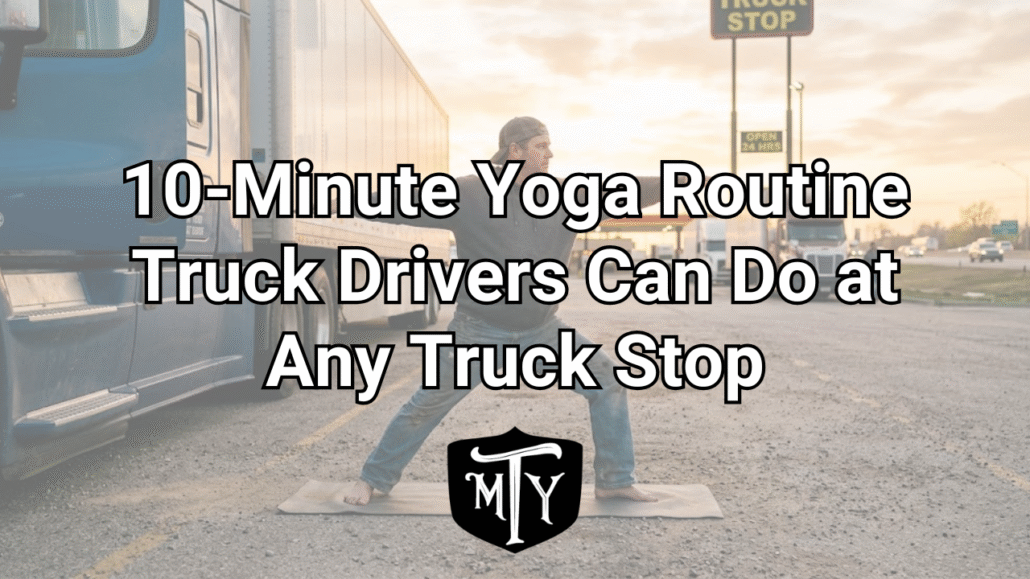
When you’re a truck driver, finding time to exercise can feel like another impossible item on an already packed schedule.
You’re watching your hours.
You’re checking traffic.
You’re making deliveries.
You’re dealing with loading and unloading.
You’re trying to eat something decent.
And somewhere in the middle of all that, your body is asking you to move.
But here’s the thing.
You don’t need an hour-long workout.
You don’t need a gym.
You don’t need a yoga studio.
And you definitely don’t need to become a professional yogi.
You can give your body some much-needed movement in about 10 minutes.
Yes, 10 minutes.
The next time you pull into a truck stop, instead of thinking you need to squeeze in a full workout, try giving yourself a simple 10-minute yoga routine.
It can help you step out of the truck, reconnect with your body, loosen up, breathe a little deeper, and get ready for the next stretch of the road.
And the best part?
You can do many of these movements with very little space.
Why Truck Drivers Need Movement Breaks
Long hours behind the wheel can put your body in one position for a long time.
Your hips stay bent.
Your legs don’t move much.
Your shoulders may round forward.
Your neck can become tense.
Your lower back can start feeling stiff.
And after several hours, you may feel like your entire body needs to unfold.
That’s completely understandable.
Your body was designed for movement, not for sitting in the same position for hours on end.
This doesn’t mean you need to exercise intensely every time you stop.
It means you need opportunities to change positions and give your muscles and joints some movement.
That’s where a short yoga routine can fit beautifully into the trucking lifestyle.
Your 10-Minute Truck Stop Yoga Routine
Before beginning, choose a safe area where you have enough room to move without interfering with traffic, equipment, or other people.
You don’t need a yoga mat if you don’t have one.
You can perform many of these movements standing.
And remember, yoga should never be painful.
Move within a comfortable range and modify anything that doesn’t feel right for your body.
Minute 1: Deep Breathing and Shoulder Rolls
Start by standing comfortably.
Place your feet about hip-width apart.
Take a slow breath in through your nose.
As you breathe out, allow your shoulders to drop.
Repeat several times.
Then begin slowly rolling your shoulders backward.
Make the movement comfortable and controlled.
After several repetitions, reverse the direction.
This is a simple way to begin transitioning from driving mode into movement mode.
You’ve been focused on the road, traffic, directions, and everything happening around you.
Now you’re giving yourself a moment to reconnect with your body.
Minute 2: Neck and Upper-Body Release
Your neck and shoulders can carry a surprising amount of tension during a long drive.
Stand tall and let your arms relax by your sides.
Slowly turn your head to look over one shoulder.
Return to center.
Then gently turn toward the other side.
Continue slowly.
You can also gently bring one ear toward one shoulder and then switch sides.
Avoid forcing the stretch or pulling on your neck.
The goal isn’t to create a huge stretch.
The goal is simply to move.
Then take a few slow shoulder rolls again.
Notice whether your shoulders feel a little less tense.
Minute 3: Standing Side Stretch
Reach one arm overhead.
Gently lean toward the opposite side.
You should feel a comfortable stretch along the side of your body.
Return to center.
Switch sides.
Continue alternating.
This movement can feel especially good after sitting for hours because you’re taking your body out of the forward-facing position you’ve been holding behind the wheel.
Think long and easy rather than forcing the stretch.
Minute 4: Standing Cat-Cow
You don’t have to get down on the ground to enjoy the movement of cat-cow.
Stand with your knees slightly bent and place your hands on your thighs.
As you inhale, gently lift your chest and allow your spine to lengthen.
As you exhale, gently round your upper back and let your head relax slightly.
Move slowly between the two positions.
This can be a great way to get your spine moving after spending hours in one position.
And because you’re standing, you don’t need a mat or a clean floor.
Perfect for life on the road.
Minute 5: Standing Forward Fold
Stand with your feet comfortably apart.
Bend your knees slightly.
Slowly hinge forward from your hips and allow your upper body to relax toward the floor.
You don’t need to touch your toes.
You don’t need perfectly straight legs.
Let your knees stay bent if that feels better.
Take a few slow breaths.
Then slowly roll or lift yourself back up to standing.
Take your time.
If you experience dizziness or discomfort, come out of the position and return to standing.
The goal is to create a gentle change in position, not to force flexibility.
Minute 6: Hip and Leg Movement
Your hips spend a lot of time flexed while you’re driving.
Let’s give them some movement.
Stand near your truck or another stable surface if you need support.
Shift your weight onto one leg.
Gently lift the opposite knee and bring it toward your chest as comfortably as you can.
Lower it.
Switch sides.
Continue alternating.
You can also add a few gentle leg swings if you have enough safe space.
Keep the movements controlled.
This isn’t about kicking as high as possible.
It’s about reminding your hips and legs that they are allowed to move.
Minute 7: Standing Warrior
Step one foot back and turn it slightly outward.
Bend your front knee comfortably while keeping your back leg strong.
Raise your arms if that feels comfortable.
Take a few breaths.
Then switch sides.
You don’t need to create a deep lunge.
A smaller stance is perfectly fine.
The goal is to engage your legs, open your hips, and create a different position from the one you’ve been sitting in.
If balance is an issue, keep one hand on your truck or another stable surface.
Minute 8: Calf Raises and Ankle Movement
Now bring your attention to your lower legs and feet.
Stand tall and slowly rise onto the balls of your feet.
Lower back down.
Repeat several times.
Then shift your weight and gently move through your ankles.
You can also lift one foot and make small ankle circles before switching sides.
Your feet spend hours supporting you when you’re standing, walking, climbing in and out of your truck, and doing your job.
Give them some attention, too.
Minute 9: Gentle Standing Twist
Stand comfortably with your feet grounded.
Place your hands across your chest or let your arms relax.
Slowly rotate your upper body toward one side.
Return to center.
Then rotate toward the other side.
Keep your hips relatively stable and let the movement come from your upper body.
Don’t force the twist.
Don’t bounce.
Just move slowly and breathe.
This can feel particularly refreshing after hours of facing forward.
Minute 10: Breathe and Reset
Finish by standing comfortably.
Close your eyes if you’re in a safe environment and feel comfortable doing so.
Take a slow breath in.
Then slowly breathe out.
Again.
And again.
Let your shoulders relax.
Notice your feet on the ground.
Notice your breathing.
Notice how your body feels compared with 10 minutes ago.
You don’t need to make this moment complicated.
Just pause.
You made time for yourself.
That’s worth something.
You Don’t Need Perfect Conditions
One of the biggest barriers to exercise on the road is the belief that you need perfect conditions.
You need a gym.
You need equipment.
You need a mat.
You need an hour.
You need a shower afterward.
You need a perfect schedule.
You don’t.
Sometimes wellness looks like 10 minutes in a safe area at a truck stop.
Sometimes it’s walking around the parking lot.
Sometimes it’s stretching next to your truck.
Sometimes it’s taking a few deep breaths before getting back behind the wheel.
The goal isn’t perfection.
The goal is consistency.
Turn Your Stops Into Wellness Opportunities
Think about how many times you stop during a typical week.
Now imagine attaching just 10 minutes of movement to some of those stops.
You don’t have to do it every single time.
Start with one stop a day.
Then see how you feel.
You might discover that your body actually starts looking forward to those breaks.
And the more you practice, the easier it becomes to make movement part of your routine.
Your truck stop doesn’t have to be just a place where you grab food and fuel.
It can also become a place where you take care of yourself.
Yoga Isn’t About Being Flexible
Let’s clear up one common misconception.
You do not have to be flexible to do yoga.
You don’t need to touch your toes.
You don’t need to balance on one foot for five minutes.
You don’t need to know complicated poses.
Yoga can simply be a way to move your body, breathe, and pay attention to how you feel.
For truck drivers, that can be incredibly valuable.
The practice doesn’t have to look like a traditional yoga class.
It can look like standing beside your truck and taking five minutes to move your spine.
It can look like rolling your shoulders after a long stretch of driving.
It can look like taking a few deep breaths when traffic has you stressed.
It can look like stretching your hips and legs before getting back on the road.
That’s yoga, too.
Listen to Your Body
Your body will tell you a lot if you give it the chance.
Maybe your hips feel tight.
Maybe your shoulders are tense.
Maybe your legs feel heavy.
Maybe your back feels stiff.
Maybe you’re simply tired.
Pay attention.
You don’t have to push through every sensation.
You don’t have to turn movement into another thing you have to accomplish.
Instead, use your routine as a check-in.
Ask yourself:
What does my body need right now?
Maybe it needs movement.
Maybe it needs water.
Maybe it needs food.
Maybe it needs rest.
Maybe it needs a few quiet minutes.
Learning to listen to your body is one of the most valuable wellness skills you can develop, especially when your work schedule doesn’t always follow a traditional routine.
Ten Minutes Can Be Enough to Start
Ten minutes may not sound like much.
But ten minutes is better than zero.
And more importantly, it can change the way you think about movement.
You don’t have to wait for the perfect time.
You don’t have to wait until you have a day off.
You don’t have to wait until you get home.
You can start where you are.
At the truck stop.
Next to your truck.
During a safe break.
With the body you have today.
The goal isn’t to become a different person overnight.
It’s simply to take better care of the person who is already doing the work.
So the next time you pull into a truck stop and your body is telling you it’s been sitting long enough, listen.
Take ten minutes.
Breathe.
Stretch.
Move.
Reset.
Then get back on the road feeling a little more connected to yourself.
Because taking care of your body isn’t something you have to do after your trucking career.
It’s something you can practice while you’re living it.
You May Also Like
Stay Active and Thrive on the Road: Tips for Truck Drivers During the Holidays
Learn simple movement strategies to protect your body and heart on the road.
🌐 https://www.cdc.gov/physicalactivity
Stressed Out on the Road? Here’s How Yoga Helps Truck Drivers Stay Calm
Discover practical stress-management tools designed for truck drivers.
🔗 https://www.mothertruckeryoga.com/2025/08/20/stress-relief-for-truck-drivers/
🌐 https://www.heart.org/en/healthy-living/healthy-lifestyle/stress-management
Improved Posture: A Truck Driver’s Secret Weapon Against Back Pain
See how mobility and posture support circulation and heart health.
🌐 https://www.mayoclinic.org/healthy-lifestyle
Summer Fitness on the Road: 5 Quick Routines for Hot Days
Explore quick routines that support circulation and cardiovascular health.
🌐 https://www.nhlbi.nih.gov/science/heart-and-vascular-diseases



Leave a Reply
Want to join the discussion?Feel free to contribute!