
How Small Daily Habits Can Transform Driver Health
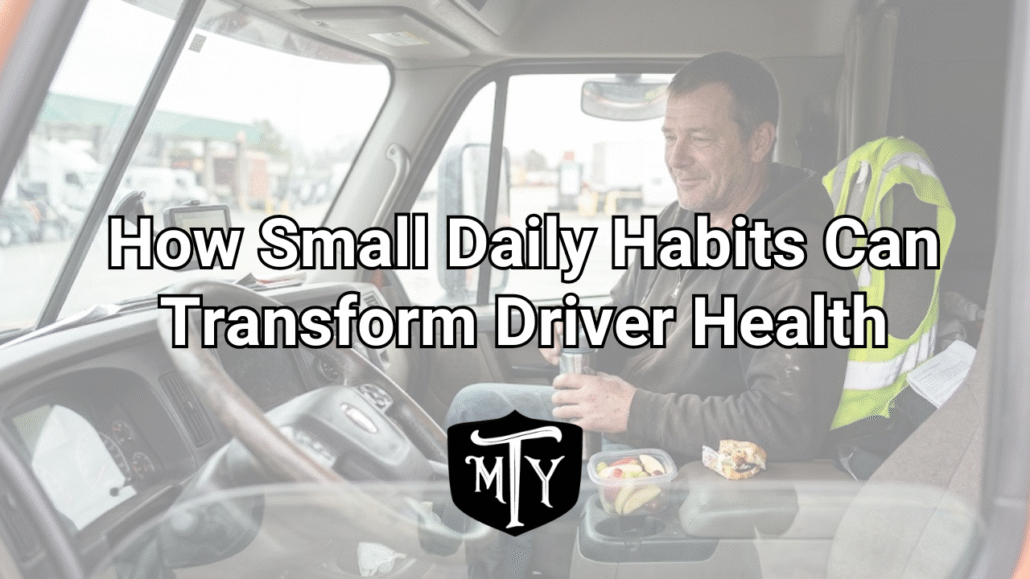
When you’re a professional driver, taking care of your health can feel like one more thing on an already full schedule.
You’re managing routes.
Deliveries.
Traffic.
Deadlines.
Fuel stops.
Weather.
Parking.
And everything else that comes with life on the road.
So when someone tells you that you need to completely change your lifestyle, work out every day, eat perfectly, and somehow find another hour in your schedule, it’s easy to think:
“When exactly am I supposed to do all of that?”
Here’s the good news.
Driver wellness doesn’t have to start with a complete lifestyle makeover.
Sometimes, it starts with one small habit.
Then another.
Then another.
Because small things done consistently can become part of the way you live and work.
Your Health Has to Fit Your Real Life
There is a big difference between knowing what is healthy and actually being able to fit healthy habits into your day.
A professional driver’s schedule isn’t always predictable.
You may have one day where you have plenty of time to walk and stretch.
The next day might be completely different.
That’s why your wellness routine needs to be flexible.
Instead of asking:
“What’s the perfect workout I can do?”
Try asking:
“What’s one healthy thing I can realistically do today?”
Maybe it’s a five-minute walk.
Maybe it’s drinking more water.
Maybe it’s stretching during a break.
Maybe it’s getting to bed a little earlier.
Maybe it’s taking a few slow breaths after a stressful stop.
Small habits are easier to repeat because they don’t require your entire day to change.
Start With Movement
One of the simplest habits you can build into life on the road is moving more throughout the day.
You don’t necessarily need a gym.
You can walk during a break.
Stretch next to your truck.
Move your shoulders after sitting for a long time.
Do a few comfortable bodyweight movements while safely parked.
Take the stairs when they’re available and practical.
The goal isn’t to turn every break into a workout.
It’s to break up long periods of sitting.
Your body was designed to move.
Even small opportunities to move can help you feel less stuck in the same position all day.
Make Water Easier to Remember
Hydration is another simple habit that can easily get pushed to the side when you’re focused on getting the job done.
You might avoid drinking because you don’t want to make another stop.
You might simply forget.
Or you may reach for coffee or an energy drink because you’re tired.
Try making water part of your routine instead of something you only think about when you’re thirsty.
Keep your water bottle somewhere convenient.
Take it with you when you leave the truck.
Drink regularly throughout the day.
You don’t have to make it complicated.
Just make water easier to access.
And remember, individual hydration needs can vary based on factors like activity, weather, and health conditions.
Use Your Breaks to Check In With Your Body
Your breaks are more than just interruptions to your driving schedule.
They’re opportunities to check in.
When you stop, ask yourself:
How does my body feel right now?
Is your lower back stiff?
Are your shoulders tight?
Are your legs tired?
Are you feeling mentally overwhelmed?
Are you hungry?
Are you thirsty?
Sometimes your body is giving you information long before you notice how uncomfortable you’ve become.
Learning to listen can help you respond earlier.
Maybe you need to walk.
Maybe you need to stretch.
Maybe you need food.
Maybe you need a few quiet minutes.
The goal is to notice instead of automatically pushing through everything.
Create a Simple Sleep Routine
Sleep can be complicated for professional drivers because schedules, routes, and environments aren’t always consistent.
But even when you can’t control everything about your schedule, you can create a few habits around sleep.
Try keeping your wind-down routine as consistent as possible.
Give yourself some time to transition out of work mode.
Keep your sleeping environment as comfortable and dark as possible.
Limit distractions when you’re trying to wind down.
And when your schedule allows, give your body enough time to rest.
Sleep isn’t wasted time.
It’s part of taking care of the body and mind you rely on every day.
Don’t Ignore Your Mental Health
Driver wellness isn’t only about your back, legs, or physical fitness.
Your mental health matters too.
Life on the road can sometimes feel isolating.
You may spend long stretches of time away from family and friends.
You may deal with stressful traffic, tight schedules, difficult situations, and the pressure of getting the job done.
That’s why small mental wellness habits matter.
Call someone you care about.
Take a few minutes to breathe.
Listen to music you enjoy.
Get outside during a break.
Take a walk.
Give yourself a moment without constantly consuming information on your phone.
And if you’re struggling emotionally, reaching out for professional support is a valid part of taking care of yourself.
You don’t have to handle everything alone.
Build Habits Around Things You Already Do
One of the easiest ways to make a habit stick is to connect it to something that’s already part of your routine.
For example:
After I park, I’ll walk for five minutes.
Before I start driving, I’ll drink some water.
After I finish a delivery, I’ll stretch my shoulders.
Before bed, I’ll take a few quiet minutes to wind down.
You’re not trying to remember an entirely new routine.
You’re attaching a small healthy action to something you already do.
That can make the habit feel much more natural.
Don’t Try to Change Everything at Once
This is where a lot of people get stuck.
You decide you’re going to completely change your health.
You create a huge list.
Exercise every day.
Eat perfectly.
Drink a gallon of water.
Sleep eight hours.
Stretch twice a day.
Meditate.
Meal prep.
And within a week, you’re exhausted by the routine.
Then everything stops.
Instead, start smaller.
Pick one habit.
Make it easy.
Repeat it.
Then build from there.
Maybe this week your only goal is to walk for five minutes during one break each day.
Once that feels normal, add another habit.
Progress doesn’t have to be dramatic to matter.
Try the “One More Healthy Choice” Rule
Here’s a simple way to think about it.
Instead of asking yourself to have a perfect day, ask:
“What’s one more healthy choice I can make today?”
One more glass of water.
One more walk.
One more stretch.
One better meal.
One earlier bedtime.
One moment to breathe.
One phone call to someone you love.
One choice to get out of the truck and move instead of sitting for another 20 minutes.
You don’t have to make every choice perfectly.
You just keep giving yourself opportunities to make better ones.
Your Environment Can Help You
Sometimes healthy habits become easier when you make them visible.
Keep your water bottle where you can see it.
Keep comfortable movement clothes accessible.
Save a short stretching routine on your phone for breaks.
Keep healthy snacks available when possible.
Use reminders if you tend to forget.
The goal isn’t to rely entirely on willpower.
Make the healthy choice easier to make.
Because when you’re tired after a long day, convenience matters.
Small Habits Add Up
Imagine taking five minutes to move during several breaks throughout the week.
Imagine choosing water more often.
Imagine taking a few minutes to stretch instead of immediately sitting down.
Imagine creating a better wind-down routine at night.
None of these actions seems huge on its own.
But health isn’t built from one giant decision.
It’s built from what you do repeatedly.
That’s why consistency matters.
You don’t have to be perfect.
You just have to keep showing up.
Give Yourself Credit for the Small Wins
As a driver, it’s easy to focus on what you didn’t do.
You didn’t get the full workout.
You didn’t eat perfectly.
You didn’t get enough sleep.
You didn’t have time for everything.
But what about what you did do?
You walked.
You stretched.
You drank water.
You got outside.
You took a break.
You called home.
You chose to take care of yourself for five minutes.
Those things count.
Don’t overlook them just because they weren’t perfect.
Your Truck Is Your Workplace, But Your Body Is Your Home
You spend a huge amount of time taking care of your truck.
You check the tires.
You monitor the fuel.
You pay attention to maintenance.
You make sure everything is working properly.
Your body deserves that same attention.
You don’t wait until something completely breaks before you start thinking about maintenance.
The same mindset can apply to your health.
Move before you’re completely stiff.
Rest before you’re completely exhausted when your schedule allows.
Drink water throughout the day.
Pay attention to your body.
Take care of your mental health.
Small maintenance habits can be easier than waiting until you’re forced to deal with a bigger problem.
Start With One Thing Today
You don’t need to leave this article with a 20-step wellness plan.
Just pick one thing.
Maybe today you take a five-minute walk during your break.
Maybe you drink more water.
Maybe you stretch your shoulders.
Maybe you put your phone away for a few minutes and simply breathe.
Tomorrow, do it again.
Then, when you’re ready, add something else.
That’s how small habits become part of your lifestyle.
Not overnight.
Not perfectly.
One choice at a time.
Because driver wellness isn’t about creating a perfect routine that only works when everything goes according to plan.
It’s about finding small ways to take care of yourself within the life you’re actually living.
Your miles matter.
Your health matters too.
Road Tested. Trucker Approved.
You May Also Like
Why Stretch Breaks Make Truckers Safer (and 5 You Can Do Anywhere)
Stretch breaks are essential for truckers to reduce fatigue, improve alertness, and lower accident risk by keeping muscles and mind active.
👉 https://www.mothertruckeryoga.com/2025/09/10/driver-stretch-breaks/
🔗 For further reading, check out “How Stretching Improves Your Trucking Performance” from https://highwaydriverleasing.com/2024/07/21/blog-how-stretching-improves/
Beat Trucking Fatigue: Simple Yoga Tools to Improve Sleep for Drivers
Practicing simple yoga and sleep hygiene helps truck drivers overcome fatigue, improve sleep quality, and perform safely behind the wheel.
👉 https://www.mothertruckeryoga.com/2025/08/13/yoga-for-trucker-sleep-and-fatigue/
🔗 External resource: “Driver Fatigue on the Job” from https://www.cdc.gov/niosh/motor-vehicle/driver-fatigue/ about managing fatigue and sleep risks.
https://www.cdc.gov/niosh/motor-vehicle/driver-fatigue/
The Mental Load of Trucking: How Yoga Supports Mental Health for Truckers
Yoga offers powerful tools to reduce stress, relieve anxiety, and support emotional wellbeing for drivers dealing with the mental load of life on the road.
👉 https://www.mothertruckeryoga.com/2025/08/06/yoga-for-mental-health-truckers/
🔗 For related insights, see “Sleep Resources” from https://www.cdc.gov/sleep/resources/
The Ultimate Truck Driver’s Guide to Managing and Relieving Back Pain Naturally
Addressing back pain naturally through posture, movement, and mobility routines can help truck drivers stay healthy, comfortable, and pain-free.
👉 https://www.mothertruckeryoga.com/2025/06/26/truck-driver-back-pain-relief-guide/
🔗 See “The Top 10 Stretches for Truck Drivers to Keep Their Bodies Pain-Free on Long Hauls” from https://www.allcomins.com/blog/the-top-10-stretches-for-truck-drivers-to-keep-their-bodies-pain-free-on-long-hauls



Leave a Reply
Want to join the discussion?Feel free to contribute!