
The Best Yoga Stretches Before Starting Your Drive
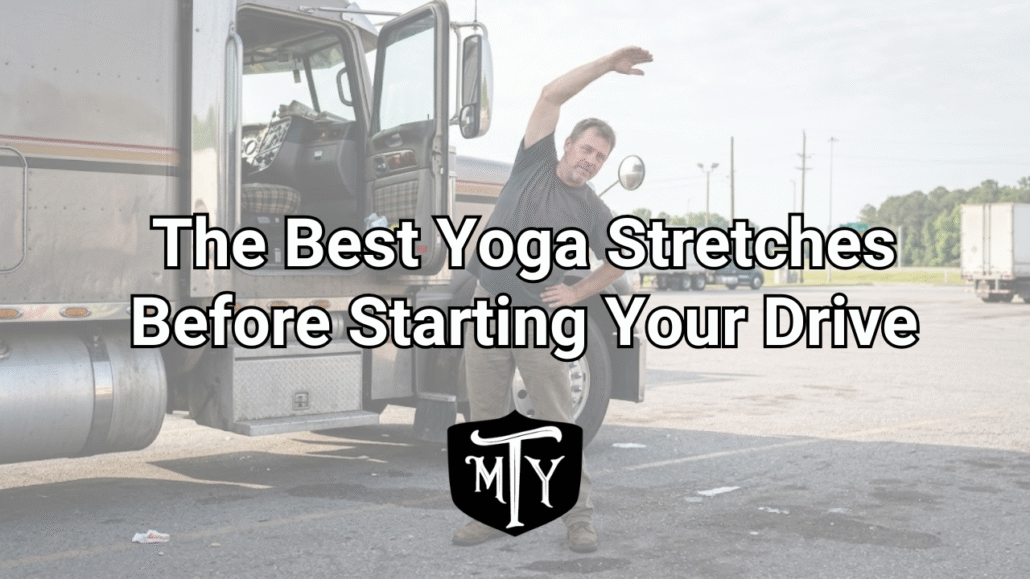
The Best Yoga Stretches Before Starting Your Drive
Before you start your drive, there’s usually a checklist.
Check the truck.
Check your route.
Check your mirrors.
Check your fuel.
Check your load.
But there’s one thing that can be easy to forget.
Check in with your body.
If you’re about to spend hours sitting behind the wheel, taking just a few minutes to move and stretch before you start can be a simple way to prepare your body for the road.
You don’t need a yoga mat.
You don’t need a gym.
You don’t need to spend 30 minutes stretching.
You can do a few simple movements beside your truck before you climb into the driver’s seat.
Think of it as a warm-up for your day.
Why Stretch Before a Long Drive?
Driving means spending a lot of time in one position.
Your hips stay bent.
Your legs stay relatively still.
Your shoulders and arms stay engaged.
Your neck and eyes remain focused forward.
And depending on your route, you could be in that position for hours.
Starting your drive with a few gentle stretches can give your body a chance to move through some different positions before you settle in.
It can also help you become more aware of areas that already feel tight or stiff.
Maybe your hips feel tight.
Maybe your shoulders are tense.
Maybe your back feels stiff after sleeping.
Maybe your legs need some movement.
A few minutes of mobility can be a simple way to check in before you hit the road.
Important: Stretching should feel comfortable. Never force a movement or stretch into pain. If you have an injury, medical condition, or specific physical limitation, check with an appropriate healthcare professional about what movements are safe for you.
You Don’t Need to Be Flexible
Let’s clear this up right away.
You don’t have to be flexible to do yoga.
You don’t need to touch your toes.
You don’t need to know complicated poses.
And you definitely don’t need to look like someone in a yoga magazine.
For truck drivers, yoga can simply mean using controlled movement, breathing, and stretching to help your body move.
This is about your body.
Not about performing a perfect pose.
1. Standing Side Stretch
Let’s start simple.
Stand with your feet about hip-width apart.
Reach one arm overhead.
Gently lean your upper body to the opposite side.
You should feel a comfortable stretch along the side of your body.
Hold for a few breaths.
Return to center.
Then switch sides.
This is an easy way to get your body moving after you’ve been standing still or sitting for a while.
Keep the movement gentle.
You don’t need to bend as far as possible.
2. Shoulder Rolls
Your shoulders can hold a surprising amount of tension.
Especially when you’re stressed.
Stand tall and let your arms relax.
Slowly roll your shoulders backward several times.
Then reverse the direction.
Keep your breathing relaxed.
You can also gently squeeze your shoulder blades together, then release.
This is a simple movement you can do almost anywhere.
And it takes less than a minute.
3. Standing Chest Opener
After sleeping or spending time sitting, your chest and shoulders can feel tight.
Try this:
Stand tall.
Bring your hands behind your back if that’s comfortable.
Gently draw your shoulders back and down.
Lift your chest slightly.
Take a few slow breaths.
Don’t force your shoulders or pull your arms.
The goal is simply to create some space across the front of your body.
If bringing your hands behind your back isn’t comfortable, simply place your hands on your hips and gently draw your shoulders back.
4. Gentle Standing Twist
A gentle standing twist can help you move through your torso before sitting down for a long drive.
Stand with your feet comfortably apart.
Place your hands on your hips or across your chest.
Keep your hips facing forward.
Slowly rotate your upper body to one side.
Return to center.
Then rotate to the other side.
Keep the movement controlled.
You don’t need to twist as far as possible.
Think smooth movement, not maximum range.
5. Standing Hip Flexor Stretch
Your hips spend a lot of time bent while you’re driving.
Before getting behind the wheel, give the front of your hips a chance to move.
Stand with one foot a comfortable distance behind you.
Keep your torso upright.
Gently bend the front knee and shift your weight forward until you feel a comfortable stretch through the front of the back hip.
Hold for several breaths.
Switch sides.
Keep your movement controlled and avoid forcing the stretch.
6. Calf Raises
Your legs are about to spend a lot of time in a relatively stationary position.
Calf raises are an easy way to get some movement before you start.
Stand near your truck or another stable surface if needed.
Slowly rise onto the balls of your feet.
Pause.
Then lower your heels back down.
Repeat several times.
Move slowly rather than rushing through the movement.
This is a simple exercise you can add to your pre-drive routine without needing much space.
7. Standing Forward Fold
If it feels comfortable for your body, try a gentle standing forward fold.
Stand with your feet comfortably apart.
Bend your knees slightly.
Slowly hinge forward from your hips.
Let your arms relax toward the floor or rest them on your legs.
You don’t need to touch your toes.
Stay within a comfortable range.
Take a few relaxed breaths, then slowly return to standing.
If you have back problems or this movement doesn’t feel good for you, skip it and choose another gentle movement instead.
8. Gentle Neck Mobility
Your neck deserves attention too.
Before driving, gently look to the right.
Return to center.
Then look to the left.
You can also gently bring your ear toward one shoulder and return to center before switching sides.
Keep the movements slow.
Avoid forcing your neck into a deep stretch or making fast, aggressive circles.
Your goal is simply to move comfortably.
9. Chair Pose Variation
If you want to add a little more movement to your pre-drive routine, try a few controlled chair pose movements.
Stand with your feet about hip-width apart.
Bend your knees slightly and send your hips back as if you’re going to sit into a chair.
Keep your chest lifted.
Hold for a few seconds.
Then stand tall.
Repeat several times if it feels comfortable.
This can be a simple way to get your legs moving before a long period of sitting.
Use a smaller range of motion if needed.
10. Finish With a Few Deep Breaths
Before climbing into the truck, take a moment to breathe.
Stand tall.
Relax your shoulders.
Take a comfortable breath in.
Slowly breathe out.
Repeat several times.
There’s no need to force the breath or hold it.
Just give yourself a moment to arrive mentally before you start your drive.
You’re not just getting your body ready.
You’re giving yourself a moment to check in.
Try This 5-Minute Pre-Drive Routine
If you don’t want to remember ten different stretches, keep it simple.
Try this:
30 seconds: Shoulder rolls
30 seconds: Side stretches
1 minute: Gentle standing twists
1 minute: Hip flexor stretch
30 seconds: Calf raises
30 seconds: Gentle neck mobility
1 minute: Easy breathing and body check-in
That’s five minutes.
That’s it.
You can adjust the timing based on what feels comfortable for you.
The goal isn’t to create another complicated task on your checklist.
It’s to create a small habit that helps you start your day with movement.
Make It Part of Your Pre-Trip Routine
The best wellness habits are often the ones attached to something you already do.
You already inspect your truck.
You already prepare your route.
You already get into the driver’s seat.
Add a few minutes of movement to that routine.
Truck check.
Route check.
Body check.
Over time, it can become automatic.
And once a habit becomes part of your normal routine, you don’t have to think about whether you have time for it.
It simply becomes part of how you start your day.
Listen to Your Body Before It Gets Loud
One of the most useful things you can do as a driver is pay attention to the early signals your body gives you.
Maybe your lower back feels tight.
Maybe your hips feel stiff.
Maybe your shoulders are already tense.
Maybe your legs feel heavy.
Don’t automatically ignore those signals.
You don’t have to panic about every ache or sensation either.
Simply notice.
Then ask:
“What can I do right now to take better care of my body?”
Sometimes the answer is movement.
Sometimes it’s rest.
Sometimes it’s hydration.
Sometimes it’s adjusting your position.
And sometimes it’s talking with a healthcare professional if something is persistent, severe, or concerning.
The important part is learning to pay attention.
Your First Few Minutes Can Set the Tone
How you start your drive matters.
If you climb into the truck feeling stiff, tense, and rushed, you may carry that feeling with you.
But if you give yourself five minutes to move, breathe, and check in, you create a different starting point.
You’re reminding yourself:
My body matters too.
You have a job to do.
You have miles to cover.
You have places to be.
But none of that means you have to completely ignore the body doing the work.
You Don’t Need Perfect
You may not have time for the full routine every morning.
That’s okay.
Do two stretches.
Do one.
Take a walk around the truck.
Roll your shoulders.
Take a few breaths.
Something is better than turning movement into an all-or-nothing decision.
The goal isn’t perfection.
The goal is consistency.
A few minutes today.
A few minutes tomorrow.
And another few minutes the next day.
Those small choices become habits.
Start Your Drive With Your Body in Mind
Before you start your next long haul, give yourself a few extra minutes.
Step outside.
Stand tall.
Move your shoulders.
Stretch your hips.
Move your legs.
Take a breath.
Check in with yourself.
Then get behind the wheel.
Because staying well on the road isn’t always about finding an hour for exercise.
Sometimes, it’s about finding five minutes before the day gets moving.
Your truck needs a pre-trip check.
So does your body.
Road Tested. Trucker Approved.
You May Also Like
Why Stretch Breaks Make Truckers Safer (and 5 You Can Do Anywhere)
Stretch breaks are essential for truckers to reduce fatigue, improve alertness, and lower accident risk by keeping muscles and mind active.
👉 https://www.mothertruckeryoga.com/2025/09/10/driver-stretch-breaks/
🔗 For further reading, check out “How Stretching Improves Your Trucking Performance” from https://highwaydriverleasing.com/2024/07/21/blog-how-stretching-improves/
Beat Trucking Fatigue: Simple Yoga Tools to Improve Sleep for Drivers
Practicing simple yoga and sleep hygiene helps truck drivers overcome fatigue, improve sleep quality, and perform safely behind the wheel.
👉 https://www.mothertruckeryoga.com/2025/08/13/yoga-for-trucker-sleep-and-fatigue/
🔗 External resource: “Driver Fatigue on the Job” from https://www.cdc.gov/niosh/motor-vehicle/driver-fatigue/ about managing fatigue and sleep risks.
https://www.cdc.gov/niosh/motor-vehicle/driver-fatigue/
The Mental Load of Trucking: How Yoga Supports Mental Health for Truckers
Yoga offers powerful tools to reduce stress, relieve anxiety, and support emotional wellbeing for drivers dealing with the mental load of life on the road.
👉 https://www.mothertruckeryoga.com/2025/08/06/yoga-for-mental-health-truckers/
🔗 For related insights, see “Sleep Resources” from https://www.cdc.gov/sleep/resources/
The Ultimate Truck Driver’s Guide to Managing and Relieving Back Pain Naturally
Addressing back pain naturally through posture, movement, and mobility routines can help truck drivers stay healthy, comfortable, and pain-free.
👉 https://www.mothertruckeryoga.com/2025/06/26/truck-driver-back-pain-relief-guide/
🔗 See “The Top 10 Stretches for Truck Drivers to Keep Their Bodies Pain-Free on Long Hauls” from https://www.allcomins.com/blog/the-top-10-stretches-for-truck-drivers-to-keep-their-bodies-pain-free-on-long-hauls


Leave a Reply
Want to join the discussion?Feel free to contribute!