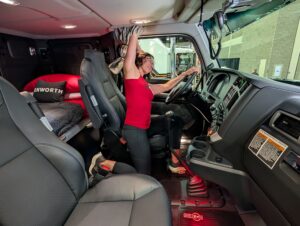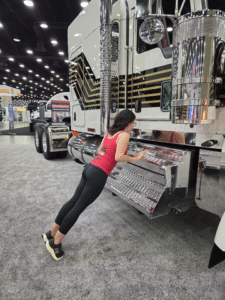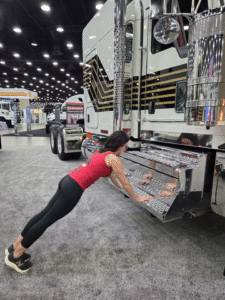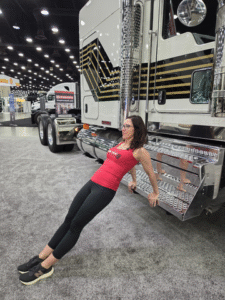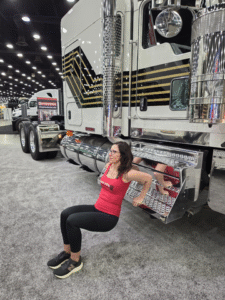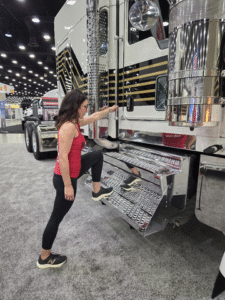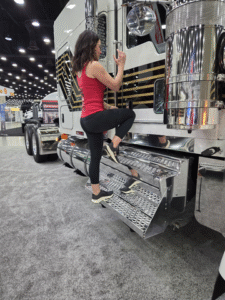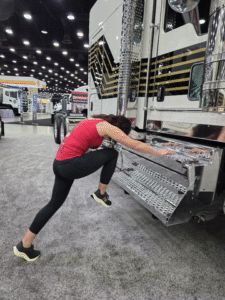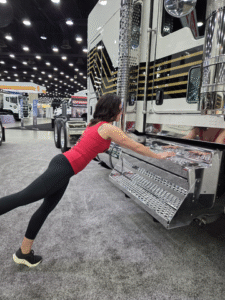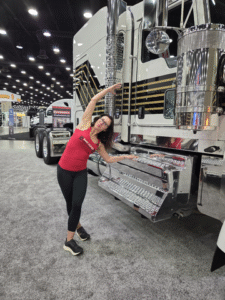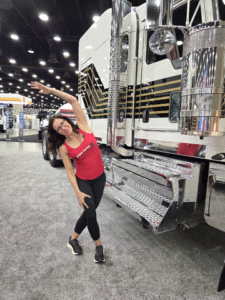
Step-tember Day 6: Balance & Strength – The Hidden Keys to Walking Better

, ,

Walking may seem simple, but as we’ve been exploring during our Step-tember Challenge, there’s more to it than just putting one foot in front of the other. On Day 6, we’re focusing on how balance and strength directly impact not only your walking performance but also your overall driver lifestyle wellness.

Many drivers (and even non-drivers) don’t realize that weakness in the core, glutes, or feet can make walking feel exhausting or even painful. But with a few targeted exercises, you can build the stability and strength needed to walk farther, faster, and with less pain.

Why Balance and Strength Matter for Drivers

Balance and strength go hand in hand when it comes to walking. Without them, fatigue, soreness, and stiffness creep in fast. Truck drivers often experience these issues because sitting for long hours weakens the muscles we rely on most—our core, glutes, legs, and even the small stabilizing muscles in our feet and ankles.

When these muscles are underdeveloped, even simple walking can feel harder than it should. But the good news? Just like getting in your daily steps, you can train balance and stability with easy, accessible exercises—even on the road.

3 Quick Exercises for Balance and Strength

Here are three simple ways you can improve stability, strength, and walking performance right now:

1. One-Leg Balance (No Equipment Needed)

Stand on one foot for 10–60 seconds. You’ll feel your leg, glutes, and core muscles firing up as your body works to stabilize. Try it while brushing your teeth, standing in line, or even at a rest stop. Start with shoes off for maximum benefit.

2. Core Ball Squats

Using a small stability or core ball, place one foot on the ball and slowly squat while keeping equal weight between both legs. This activates deep stabilizers in your core, glutes, and legs that you can’t reach with traditional sit-ups. (Find travel-friendly fitness tools like this in the Mother Trucker Yoga shop.)

3. Calf Raises with Core Engagement

Stand with bare feet, spread your toes wide, and rise up onto the balls of your feet. To increase intensity, place a small ball or object between your ankles and squeeze while lifting. This strengthens your calves, ankles, and even your pelvic floor.

These simple but powerful moves are the building blocks of stronger walking and better overall mobility.

The Ripple Effect of Stronger Balance

When you prioritize balance and strength, you’re not just making walking easier—you’re protecting your body from long-term decline. Weak, underused muscles lead to pain, stiffness, and even serious injuries later in life. But by investing in your health now, you set yourself up for more energy, better posture, and greater longevity behind the wheel and beyond.

Your health is an investment worth making—not just for your career, but for your family, your hobbies, and yourself.

Watch the Full Day 6 Video

👉 Step-tember Day 6: Balance & Strength Exercises

You May Also Like

Stress management is key to safe driving. Learn how yoga helps: Stressed Out on the Road? Here’s How Yoga Helps | Explore NIH research on stress management techniques.

Day 5 of STEP-tember: Why Every Step Counts for Truck Drivers

, ,

STEP-tember Day 5: Why Every Step Counts for Truck Drivers

Happy Trucker Appreciation Week, and welcome to Day 5 of STEP-tember! 🚛👣 We’re halfway through our walking challenge, and today’s focus is all about why walking is one of the simplest yet most powerful tools truck drivers can use to reclaim their health. walking for truck drivers

Many drivers believe fatigue, stiffness, and back pain are just part of the job. But the truth is—those symptoms often come from inactivity, not just age or long hours on the road. Walking is free, requires no equipment, and can be done anywhere, making it the most accessible form of exercise for truckers.

Why Walking Matters for Truck Drivers

Think about this: most of us push through our daily grind until pain, stiffness, or fatigue catches up. For truck drivers, this lifestyle can hit even harder, with long hours behind the wheel and limited movement.

But walking has proven benefits for drivers:

  • Reduces stiffness – keeping joints flexible so even tying your shoes doesn’t feel like a chore. 
  • Boosts energy – instead of draining you, walking can actually help fight fatigue. 
  • Improves digestion and sleep – walking stimulates the body, reducing issues like constipation and restless legs. 
  • Protects long-term mobility – consistent movement keeps muscles, joints, and bones strong, helping prevent early decline. 

This isn’t about doing more, faster, or longer. It’s about consistent small steps that add up to a healthier, more energized you.

The Power of 2,000 Steps

Did you know that one mile is roughly 2,000–2,500 steps? That’s just 15–20 minutes of gentle walking. For drivers who feel pressed for time, that’s less than one TV episode or a single phone call.

The truth is, time isn’t the issue—priorities are. When drivers shift their mindset to make walking a non-negotiable part of their daily routine, their health, energy, and even their mood improve dramatically.

Breaking the Excuses

Hope Zvara shares a powerful reminder: “I call BS on ‘I’m too busy.’” Whether you’re a truck driver, teacher, or parent, your health only becomes a priority when you decide it matters.

Excuses like “I’m too tired” or “I don’t have time” can keep drivers stuck in the same unhealthy patterns. The reality is:

  • Walking actually energizes your body instead of draining it. 
  • Even 2,000 steps can make a big difference for energy, mood, and mobility. 
  • Your health impacts more than just you—it affects your family, career, and future. 

A Simple Step to Better Health

Walking isn’t about hitting a marathon-level step goal. It’s about choosing progress over perfection. Every step you take is a step away from pain, fatigue, and preventable health issues.

So today, make a choice:

  • Park a little farther from your destination. 
  • Walk a lap around the truck stop before heading in. 
  • Add an extra mile to your daily step count. 

Each small effort builds momentum, and momentum creates lasting change.

Inbound Links:

External Link:

For more research on the benefits of walking, see Harvard Health: Walking for Health.

You May Also Like

Why Stretch Breaks Make Truckers Safer (and 5 You Can Do Anywhere)
Stretching keeps fatigue at bay and reduces injury risks for drivers on the road.
👉 Read it here
Learn more about fatigue prevention from the FMCSA Driver Safety Tips.

How Posture Affects Driving Safety (and How to Fix It on the Road)
Good posture improves focus and reduces back strain while driving long hours.
👉 Read it here
Explore Mayo Clinic’s ergonomics guide for posture-friendly habits.

Aching After a Long Haul? Try These Yoga Moves for On-the-Road Pain Relief
Relieve tight muscles and joint pain with quick yoga moves designed for drivers.
👉 Read it here
Check out additional strategies from the American Chiropractic Association.

Stressed Out on the Road? Here’s How Yoga Helps Truck Drivers Stay Calm
Discover how yoga reduces stress and helps truckers stay calm during long hauls.
👉 Read it here
Read more about stress management from the American Psychological Association.

STEP-tember Day 4 The Benefits of Walking with a Weighted Vest for Truck Drivers

, ,

The Benefits of Walking with a Weighted Vest for Truck Drivers

Happy Trucker Appreciation Week, drivers! September is more than just the start of fall—it’s what I like to call Step-tember, a time to celebrate truckers and encourage healthier habits on and off the road. Walking is one of the easiest, most effective ways to stay healthy, and today we’re going one step further: adding a weighted vest to your walking routine. DAY 4

If you’ve never tried one, a weighted vest can take your walk from good to great by strengthening your body, burning extra calories, and even helping with posture—something every driver needs.

Why Walking Is the First Step to Better Health

Walking is free. You can do it anywhere, anytime—even inside your truck while on a break. Studies show that walking improves metabolism, supports digestion, and even acts as a natural antidepressant by boosting dopamine and other “feel-good” brain chemicals (Harvard Health).

For truck drivers especially, walking can:

  • Help relieve constipation by stimulating digestion. 
  • Reduce feelings of stress and anxiety. 
  • Improve circulation after long hours of sitting. 
  • Keep muscles active that otherwise get tight or weak behind the wheel. 

If you’re already walking, you’re on the right track. But if you want to level up—let’s talk weighted vests.

Why Add a Weighted Vest to Your Walk?

A weighted vest is exactly what it sounds like: a vest you wear while walking that adds extra weight to your body. This simple tool provides several major benefits for drivers:

  1. Burn More Calories
    If you only have 10–20 minutes to walk, wearing a weighted vest can help you burn more calories in the same amount of time. Think of it as doubling down on the effort you’re already making. 
  2. Improve Bone Density
    Both men and women experience bone loss as they age, which can lead to osteoporosis. Adding a little resistance through weight-bearing activities like walking with a vest helps strengthen bones (NIH Osteoporosis & Related Bone Diseases Center). 
  3. Strengthen Core, Back & Glutes
    Sitting for long hours in the cab weakens your glutes, strains your lower back, and turns off your core muscles. A weighted vest naturally encourages better posture and forces these muscles to activate while walking. 
  4. Add Variety Without Complication
    Unlike gym equipment, a vest is small, portable, and easy to use anywhere—whether you’re on a 30-minute break or stretching your legs at a rest stop. 

How to Choose the Right Weighted Vest

Not all vests are created equal, and starting too heavy can do more harm than good. Here’s what you need to know:

  • Start Light: A safe starting point is 5–10% of your body weight. For example, if you weigh 200 pounds, begin with 10–15 pounds. If you’re brand new to exercise, consider starting even lighter. 
  • Watch for Warning Signs: If you feel back, shoulder, or neck pain—or if shin splints suddenly appear—it’s a sign your vest is too heavy. Scale back before adding more weight. 
  • Look for Comfort & Fit: Sleeker vests that fit under a jacket or sweatshirt are often better for truckers than bulky, military-style vests that can feel hot and heavy. 
  • Progress Gradually: Just like lifting weights, you can increase resistance over time. Start at 8 pounds, then build up to 10, 12, or 15 pounds as your body adapts. 

When (and When Not) to Wear a Weighted Vest

Best times to wear one:

  • On daily walks around your truck, parking lot, or neighborhood. 
  • While doing bodyweight exercises like squats, lunges, or step-ups. 
  • During short breaks to maximize calorie burn. 

When to avoid it:

  • If you’re brand new to exercise—start walking first, then add weight later. 
  • If you have existing back or joint pain. 
  • On long hauls where comfort and mobility are more important. 

Real-Life Tips for Truckers

  • Try walking in place inside your truck while watching TV or talking on the phone. 
  • Roll out your feet with a massage ball before walking to relieve tension and prevent plantar fasciitis (Road Relief Wellness Massage Balls). 
  • Track your daily steps—challenge yourself to add one extra mile this week. 

A Final Word on Change

Change isn’t always easy. Whether it’s walking more, trying a weighted vest, or adjusting your routine, it can feel uncomfortable at first. But as I often remind my clients: If what you’ve been doing was working so well, wouldn’t you already be where you want to be?

So maybe the small change you need this season is as simple as adding a weighted vest to your walk. Your bones, muscles, and future self will thank you.

📺 Watch the Video: https://youtu.be/7VobIPAPjAI

Hope Zvara on the Benefits of Weighted Vests (insert YouTube/Facebook link)

You May Also Like:

CDC: The Benefits of Walking – Research-based reasons walking is one of the best forms of exercise.

DAY 4

STEP-tember Day 3: Foot Care for Truck Drivers | National Trucker Appreciation Week

, , ,

STEP-tember Day 3: Foot Care for Truck Drivers | National Trucker Appreciation Week

Walking is one of the simplest, most powerful tools for better health. For truck drivers, it’s not only about getting steps in—it’s about making sure your body stays strong, mobile, and pain-free.

Today is Day 3 of the STEP-tember Challenge and also National Truck Driver Appreciation Week. That makes it the perfect time to honor drivers by focusing on an often-overlooked part of driver wellness: your feet.

🎥 Watch today’s video here:
👉 STEP-tember Day 3: Foot Care for Truck Drivers

Why Foot Care Matters for Drivers

Your feet are your foundation. Just like a house, if the foundation is weak, cracks will eventually show up everywhere else. Spending long hours in shoes—or worse, sitting still—causes the muscles in your feet and legs to tighten and weaken.

When that happens, you may notice:

  • Flat feet or collapsed arches

  • Tight calves and sore ankles

  • Hip stiffness or back pain from imbalance

The truth is, most foot issues are caused by lifestyle and environment—not by genetics. You weren’t born with flat feet; that’s an adaptation from being in shoes all day long.

Step 1: Take Your Shoes Off

Shoes are like a cast. They protect your feet, but they also do all the work, leaving your muscles lazy and weak. Just like you wouldn’t leave a cast on your arm forever, you don’t want to keep your feet “casted” all day either.

Whenever you can:

  • Go barefoot (at home, in your yard, or in your cab)

  • Walk on uneven ground to wake up the muscles

  • Stretch your toes by rolling over them gently

This simple habit helps restore strength and mobility to your feet.

Step 2: Roll It Out

One of the best ways to keep your feet healthy is with daily rolling. Using a massage ball, gently roll the bottoms of your feet to release tight fascia, stimulate circulation, and reduce pain.

👉 Grab your own Massage Ball Duo and use code STEP10 to save today.

Step 3: Pump Your Calves

Your calves are often called the “hydraulic pump for the heart.” Every time you walk, your calves help push blood back up to your heart, which is essential for circulation and overall health.

Try this Calf Pump Stretch:

  1. Step one foot back with a small stride, both feet facing forward.

  2. Keep your back heel pressed firmly into the ground.

  3. Bend your back knee slightly while keeping the heel down.

  4. Hold for a few seconds, then return.

  5. Repeat 10–30 times, several times a day.

This move helps reduce tightness, supports blood flow, and can even ease issues like plantar fasciitis and knee pain.

Step 4: Stretch Your Hip Flexors

Sitting tightens your hips, and even walking can make hip flexors cranky. To stay balanced:

  • Take a modest lunge step back.

  • Bend your back knee slightly and square your hips forward.

  • Tuck your tailbone under and gently lean back.

  • Add an overhead arm reach for an extra stretch.

Opening your hips allows you to walk more efficiently and helps reduce strain on your back.

Build Habits That Last

Don’t wait until pain or injury forces you to care about your body. Building small habits now—like barefoot time, calf pumps, and daily rolling—keeps you healthy for years to come.

Walking isn’t just exercise. It’s medicine for your heart, your mood, and your future.

🚶‍♂️ Add one extra mile today for your STEP-tember Challenge. Your body will thank you tomorrow, next year, and every year after.

You May Also Like

STEP-tember Day 1: Why Walking Matters for Truck Drivers
Discover why walking is one of the most powerful exercises for drivers and how to fit it into your daily routine.
👉 Read More
🔗 For related info, see the American Heart Association on walking benefits.

STEP-tember Day 2: Mindful Walking for Truck Drivers
Learn how adding mindfulness to your walking can improve mood, focus, and overall wellness.
👉 Read More
🔗 External resource: CDC on stroke prevention through physical activity.

Truck Driver Back Pain Relief Guide
Explore natural solutions for managing and relieving back pain on the road.
👉 Read More
🔗 Extra resource: Harvard Health on lifestyle and back health.

STEP-tember Day 2: Mindful Walking for Truck Drivers | Add 1 Extra Mile (2,000 Steps)

, ,

STEP-tember Challenge Day 2: Mindful Walking for Truck Drivers

Happy Trucker Appreciation Week! 🚛 On Day 2 of the STEP-tember Challenge, we’re diving into something that can change how you feel every single day on the road: mindful walking.

Yesterday, we kicked things off with the invitation to walk one extra mile a day (about 2,000 steps). Today, we’re focusing on how you walk—because the way your feet move can impact everything from your knees to your lower back.

👉 Watch Day 2 here: STEP-tember Day 2 Video

Why Mindful Walking Matters

Walking isn’t just about getting steps in—it’s about how those steps are taken. For truck drivers who spend long hours sitting, every intentional step helps correct movement patterns and reduce pain.

When you walk with intention:

  • Your feet track forward, reducing strain on knees and hips 👣

  • You engage muscles evenly, improving balance and posture 💪

  • You prevent chronic pain caused by years of misalignment 🚑

  • You stay present and lower stress by focusing on your body 🧠

Even small changes—like pointing your feet forward instead of slightly out—can take pressure off your knees, hips, and back.

Check Your Shoes for Clues

Want to know how you’ve been walking? Look at the bottom of your shoes.

  • Outer edges worn down? You’re walking on the outside of your feet.

  • Uneven tread? That could signal a hip or gait imbalance.

  • Heel drag? Your walking pattern may be stressing your joints.

Mindful walking starts with awareness. Once you see the patterns, you can begin correcting them one step at a time.

Tools to Support Mindful Walking

Adjusting how you walk may feel uncomfortable at first. That’s where recovery tools come in:

  • Road Relief Massage Ball Duo – Roll your feet for 30 seconds daily to release tight fascia and improve flexibility.

  • Massage Gun or Foam Roller – Use on hips and thighs to ease tension as your body adjusts to new walking patterns.

👉 Get your Massage Ball Duo Travel Set here and use code STEP10 for 10% off during STEP-tember.

Today’s Challenge: Walk With Intention

Here’s your action step for Day 2:

  1. Add 1 extra mile (2,000 steps) today.

  2. Walk with your feet pointing forward—not turned out or in.

  3. Pay attention to how your body feels as you move.

Remember: it takes 6–12 weeks for fascia (the connective tissue in your body) to regenerate and adapt. That means the mindful steps you take today can reshape your health for months and years to come.

You May Also Like

  • The Hidden Power of Breathwork for Entrepreneurs – Discover how mindful breathing reduces stress and boosts focus.

  • Staying Active and Healthy During Long Hauls – Practical movement tips for truckers on the road.

  • CDC – Walking: A Step in the Right Direction – Research-backed benefits of walking regularly.

Sleep, Stamina & Safety: Why Truckers Can’t Ignore Rest Anymore

, ,

Sleep, Stamina & Safety: Why Truckers Can’t Ignore Rest Anymore

Truck driver sleep and safety

Ask any truck driver what the hardest part of the job is, and you’ll hear the same answer again and again: the long hours. But it’s not just hours behind the wheel that wear drivers down — it’s the lack of quality sleep.

Fatigue is one of the leading causes of accidents in trucking. According to the Federal Motor Carrier Safety Administration (FMCSA), drowsy driving is just as dangerous as drunk driving, slowing reaction times and impairing judgment.

The bottom line? No amount of coffee or energy drinks can replace good sleep. Let’s break down why rest is essential for truckers, how it impacts safety, and practical ways to improve your sleep on the road.

The Real Cost of Fatigue

Fatigue is more than just feeling tired. For truck drivers, it shows up in ways that directly affect safety:

  1. Slower reaction times → That extra second can mean the difference between stopping safely and a collision.
  2. Impaired judgment → Just like alcohol, sleep deprivation reduces decision-making ability.
  3. Microsleeps → Brief, uncontrollable “nod offs” lasting 1–10 seconds — extremely dangerous at highway speeds.
  4. Weakened stamina → Long hauls feel even longer when your body and brain are running on empty.

The FMCSA estimates that 13% of commercial drivers involved in crashes were considered fatigued at the time.

Why Sleep is So Hard for Truck Drivers

Getting good sleep on the road isn’t simple. Drivers face unique challenges:

  1. Irregular schedules → Early mornings, late nights, and shifting delivery windows disrupt circadian rhythms.
  2. Sleeper cabs → Not every cab is optimized for comfort, temperature, or noise control.
  3. Parking stress → Hours spent finding safe parking cuts into rest time.
  4. Caffeine dependency → Too much late-day caffeine delays deep sleep.

The result? Even when drivers technically “log rest,” the quality of that sleep often isn’t enough to restore alertness.

The Science of Sleep & Safety

Here’s what happens when you don’t get enough sleep:

  1. Less than 5 hours of sleep = risk of crash is doubled.
  2. Being awake 18 hours straight = driving with the same impairment as a blood alcohol content (BAC) of 0.05%.
  3. Being awake 24 hours = same impairment as a BAC of 0.10% (above the legal limit).

👉 Translation: Fatigue is a safety hazard, not just a personal discomfort.

Practical Tips for Better Sleep on the Road

Even if you can’t control your schedule, you can control your sleep environment and habits.

1. Create a Sleep Routine

  1. Go to bed and wake up at consistent times when possible.
  2. Signal your body it’s time for rest with a wind-down ritual: stretching, journaling, or dimming lights.

2. Optimize Your Sleeper Cab

  1. Invest in blackout curtains to block light.
  2. Use a supportive mattress topper and proper pillow.
  3. Keep cab temperature cool (60–67°F is ideal for sleep).

3. Cut the Caffeine (on Time)

  1. Limit coffee, energy drinks, or soda at least 6 hours before bedtime.
  2. Swap in water or herbal tea for hydration instead.

4. Use Micro-Naps Wisely

  1. A 15–20 minute nap can restore alertness without grogginess.
  2. Avoid naps longer than 30 minutes during shifts (to prevent sleep inertia).

5. Stretch Before Bed

  1. Gentle stretches calm the nervous system and release tension.
  2. Try: seated forward fold, gentle neck rolls, or legs-up-on-the-bunk.

A Trucker’s Mini Bedtime Routine (5 Minutes)

Want something you can do tonight to sleep better? Try this:

  1. Sit on your bunk – inhale deeply, exhale slowly (repeat 3x).
  2. Gentle seated twist – release spinal tension.
  3. Neck stretch – right ear to shoulder, hold 20 sec each side.
  4. Seated forward fold – reach toward feet, release hamstrings.
  5. Legs up on bunk wall – lie down, legs elevated for 2 minutes.

This mini routine signals your body: it’s time to rest.

Safety + Sleep = Better Performance

Think of sleep like maintenance for your truck. You wouldn’t drive 2,000 miles without an oil change, and you can’t expect your body to keep performing without rest.

With better sleep, you’ll notice:

  1. Faster reaction times
  2. More stamina on long hauls
  3. Better mood and patience on the road
  4. Fewer aches and pains

Final Thoughts

Fatigue is a silent risk on America’s highways. But by prioritizing rest, truck drivers can protect their health, performance, and safety.

Better sleep isn’t a luxury — it’s part of being a professional, safe driver. And just like learning the best routes or how to handle your rig, sleep strategies are a skill every trucker can (and should) master.

✨ Want simple stretches and wellness tips designed to help drivers rest better? Explore our Mother Trucker Yoga Jumpstart Programs — built for drivers, fleets, and CDL schools. Truck driver sleep and safety

Step-tember Challenge: Why Every Driver Needs to Walk One Extra Mile This Week

, ,

Celebrate Trucker Appreciation Week with Movement

Happy Trucker Appreciation Week to every hardworking driver out there! 🚛 Without you, our shelves would be empty, and our lives would look very different. That’s why I want to celebrate YOU this week with something simple yet powerful: the Step-tember Challenge.

What is it? It’s your invitation to dedicate yourself to walking one extra mile every single day this week. It might sound small, but those extra steps add up—and they can make a huge difference in your health, mood, and energy.

Why Walking Still Works

Walking is one of the oldest, simplest, and most effective forms of exercise. No fancy equipment. No gym membership. Just you and your two feet. Here’s why it matters:

  • Boosts metabolism and digestion 🚶‍♂️

  • Improves sleep and reduces fatigue 🛌

  • Strengthens muscles and joints 💪

  • Clears the mind and lowers stress 🧠

  • Acts as a natural antidepressant without a prescription refill 🌟

One mile equals about 2,000 steps or 15–25 minutes of movement. That’s roughly 32 laps around your truck and trailer. Even if you break it up into 5- or 10-minute increments, it still counts!

The Power of “On-Purpose” Steps

You might already rack up thousands of steps during your day. But here’s the difference—regular steps happen by accident, on-purpose steps happen by choice.

On-purpose steps help you:

  • Rewire your brain toward better habits

  • Build momentum for healthier choices

  • Tell yourself that YOU matter

This week, don’t just count the steps your job already gives you—make them intentional. That’s where the magic happens.

Foot Health: The Foundation of Movement

Your feet are the base of everything. Stuck in boots or shoes all day, they take a beating. And here’s the kicker: foot issues often create problems everywhere else.

  • Neck pain? Could be tight feet.

  • Chronic back stiffness? Check your plantar tendon.

  • Constant calf cramps? Fascia in your feet may be the culprit.

That’s why I swear by one of my favorite tools: the Road Relief Wellness Massage Ball Duo.

A Simple Tool for a Big Impact

Rolling your feet with massage balls for just 30 seconds a day can:

  • Relieve calf cramps

  • Reduce knee and lower back pain

  • Improve circulation and flexibility

  • Make walking more enjoyable

I never travel without mine! They’re small, effective, and TSA-approved (yes, I’ve raised some eyebrows at airport security).

👉 Get your Road Relief Wellness Massage Balls Duo Travel Set here:
Road Relief Massage Ball Duo

Use code STEP10 for 10% off your set this week.

Join the Step-tember Challenge

Here’s your invitation:

  1. Walk one extra mile every day this week on purpose.

  2. Use your massage balls for 30 seconds in the morning or before bed.

  3. Celebrate small wins—because every step counts toward better health.

Your health matters today, tomorrow, and every mile down the road. This Trucker Appreciation Week, show yourself the appreciation you deserve.

Celebrate small wins—because every step counts toward better health.
👉 Watch here: https://www.youtube.com/watch?v=QIT00eDtfxU

Your health matters today, tomorrow, and every mile down the road. This Trucker Appreciation Week, show yourself the appreciation you deserve.

You May Also Like

CDC – The Benefits of Physical Activity – Research-backed reasons walking and movement matter.

Why Stretch Breaks Make Truckers Safer (and 5 You Can Do Anywhere)

, ,

Why Stretch Breaks Make Truckers Safer (and 5 You Can Do Anywhere)

When you think about trucking safety, what comes to mind? Maybe speed limits, blind spots, or DOT regulations. But here’s a safety factor many overlook: Truck driver stretch breaks.

Yes — stretching. It might not sound as important as brake checks or logbooks, but the truth is, your ability to react, stay alert, and drive safely is tied directly to how your body feels. And after sitting for hours, stiffness and fatigue are more than just uncomfortable — they’re a safety risk.

Let’s break down why stretch breaks matter for truckers, and five moves you can start using today to feel better, stay safer, and keep rolling strong.

Why Stretching Matters for Truck Drivers

Truckers spend more time sitting than almost any other profession. According to the CDC, long periods of sitting increase risks of musculoskeletal pain, fatigue, and decreased circulation (CDC – Benefits of Physical Activity).

Here’s why that matters for safety:

  1. Stiff Muscles = Slower ReflexesTight hips, shoulders, and backs mean your body can’t move as freely. That half-second delay in turning your head or hitting the brake can be critical.
  2. Poor Circulation = FatigueSitting for too long reduces blood flow, which contributes to drowsiness and swelling in the legs.
  3. Tension = Pain & DistractionDriving with an aching back or stiff neck takes focus away from the road.
  4. Movement = AlertnessStudies show short bouts of physical activity improve focus, cognitive performance, and mood.

👉 Translation: Stretching isn’t just “nice to do.” It’s one of the cheapest, fastest safety tools you already have.

When Should Truckers Stretch?

The best stretch is the one you actually do. Aim for:

  1. Every 2–3 hours on the road (whenever you fuel up or take a bathroom break).
  2. At rest stops before meals to help digestion and circulation.
  3. Before bed in your sleeper to improve sleep quality.

Even 2–5 minutes makes a difference. Think of stretching like checking your mirrors — small adjustments that prevent big problems.

5 Simple Stretch Breaks for Truck Drivers

You don’t need a yoga mat, fancy clothes, or even a lot of space. These stretches are cab-friendly and parking-lot-approved.

1. Seated Spinal Twist

For back stiffness & alertness

  1. Sit tall in your driver’s seat.
  2. Place right hand on the outside of your left thigh.
  3. Gently twist torso to the left, looking over your shoulder.
  4. Hold for 20–30 seconds, breathe deeply. Switch sides.

👉 Benefits: Relieves lower back stiffness, improves spinal mobility.

2. Standing Chest Opener

For rounded shoulders & better breathing

  1. Stand tall behind your cab.
  2. Clasp hands behind your back (or grab your wrist).
  3. Squeeze shoulder blades together and lift chest.
  4. Hold for 20–30 seconds, breathing deeply.

👉 Benefits: Improves posture, opens chest, increases lung capacity.

3. Hamstring Stretch (One-Legged)

For tight legs & circulation

  1. Place heel on your step or trailer edge.
  2. Keep leg straight, hinge forward at hips (not lower back).
  3. Hold 20–30 seconds per leg.

👉 Benefits: Reduces lower back strain, improves blood flow in legs.

4. Neck Stretch Series

For tension headaches & road scanning

  1. Sit or stand tall.
  2. Drop right ear toward shoulder, hold 20 seconds.
  3. Switch to left side.
  4. For bonus, gently tuck chin down and hold.

👉 Benefits: Relieves neck stiffness, improves head-turning for blind-spot checks.

5. Hip Flexor Stretch

For stiff hips from long sitting

  1. Stand with one foot forward, one back (like a lunge).
  2. Bend front knee, keep back leg straight, and shift hips forward.
  3. Hold 20–30 seconds per side.

👉 Benefits: Loosens tight hips, supports lower back, helps posture.

The Safety Impact of Stretch Breaks

Stretch breaks aren’t just about feeling better. They’re about driving safer.

  1. Reaction Time → Looser muscles = faster movements.
  2. Focus & Alertness → Movement improves blood flow and oxygen to the brain.
  3. Pain Reduction → Less distraction from aches = more attention to the road.
  4. Long-Term Health → Less risk of chronic pain = fewer missed days and longer careers.

In fact, one study found that short movement breaks throughout the day improve focus and reduce fatigue just as effectively as longer exercise sessions (NIH, 2019).

From Pain to Performance: A Truck Driver’s Secret Weapon

Most drivers don’t think of stretching as part of their job. But in reality, it’s one of the simplest tools to help you stay safe, alert, and comfortable.

Think of it like fueling your truck: ignore it, and sooner or later, you’ll break down. Take a few minutes for stretch breaks, and you’ll notice:

  1. Less back pain
  2. More energy on long hauls
  3. Better mood at the end of the day
  4. Increased focus behind the wheel

🌟 Final Thoughts

Stretching won’t add hours to your logbook, but it will add quality to your hours. By building stretch breaks into your routine, you protect not only your health but also your safety — and the safety of everyone else on the road.

The road can be tough on your body. But with the right stretches, it doesn’t have to be.

✨ Want more simple stretches made for truckers? Check out our Mother Trucker Yoga Jumpstart Programs— designed for drivers, fleets, and CDL schools who want to make wellness a part of the journey. Truck driver stretch breaks

How Posture Affects Driving Safety (and How to Fix It on the Road)

,

How Posture Affects Driving Safety (and How to Fix It on the Road)

For professional drivers, safety is everything. Most drivers think about safety in terms of speed, awareness, or road conditions. But here’s a factor many overlook: posture.

How you sit behind the wheel doesn’t just affect your comfort — it directly impacts your reaction time, fatigue, and overall driving safety.

Whether you’re hauling cross-country or navigating city routes, posture matters. The good news? A few small adjustments can make a huge difference in keeping you safe, alert, and pain-free.

 The Connection Between Posture and Driving Safety

Driving posture isn’t just about comfort. It’s about how your body functions behind the wheel.

  1. Fatigue & Alertness → Slouching reduces lung capacity by up to 30%, limiting oxygen intake and making you feel drowsier faster (American Council on Exercise).
  2. Reaction Time → A hunched or twisted posture restricts blood flow and can slow down reflexes when quick movements are needed.
  3. Spinal Health → Long hours of poor posture increase risk of back pain, herniated discs, and sciatica — all of which affect focus and mobility.
  4. Vision & Focus → Poor posture can shift head and eye position, affecting visibility of mirrors and blind spots.

Translation: posture is a safety issue, not just a comfort issue.

 The Most Common Truck Driver Posture Problems

After working with thousands of drivers, here’s what shows up most often in the cab:

  1. Slouching Shoulders – Hunched forward over the wheel.
  2. Forward Head Posture – “Turtle neck,” where the head juts forward.
  3. Rounded Lower Back – Sitting on the tailbone instead of the sit bones.
  4. One-Sided Leaning – Shifting weight to one hip or leaning on the armrest.
  5. Locked Knees – Sitting stiff with no lower-body movement for hours.

Each of these may feel minor at the moment, but over hundreds of miles, they add up to fatigue, pain, and slower reaction times.

 The Ergonomics of a Safer Cab

Before we even talk stretches, let’s talk about seat setup. Just like pilots or athletes adjust their equipment, truckers need to fine-tune their cab ergonomics.

  1. Seat Height → Your hips should be level or slightly above your knees.
  2. Backrest Angle → Reclined about 100–110 degrees for support without slouching.
  3. Steering Wheel → Adjust so elbows are slightly bent; avoid reaching or locking arms.
  4. Mirror Check → Sit tall first, then adjust mirrors. This trains your body to maintain upright posture.

👉 Pro tip: If you adjust your mirrors while slouching, you’ll unconsciously keep slouching to see them.

 Quick Fixes: 5 Simple On-the-Road Posture Resets

Here are easy posture practices you can do on breaks — or even at red lights.

1. Shoulder Blade Squeeze

Counteracts slouching and opens chest for better breathing.

  1. Sit tall.
  2. Squeeze shoulder blades together like you’re pinching a pencil.
  3. Hold for 3 seconds, release. Repeat 10 times.

2. Neck Rolls & Chin Tucks

Fixes forward head posture.

  1. Gently drop chin toward chest, roll head side to side.
  2. Then, sit tall and draw your chin straight back (like making a double chin).
  3. Hold 5 seconds, repeat 5–10 times.

3. Seated Pelvic Tilts

Resets lower back tension.

  1. Sit tall.
  2. Tilt pelvis forward (arch back slightly), then tilt backward (round back).
  3. Repeat slowly 10–15 times.

4. Seated Leg Extensions

Improves circulation, reduces stiffness.

  1. Extend one leg straight out, flex foot up and down.
  2. Alternate legs, 10 reps each.

5. 360° Breathing

Expands lungs, boosts alertness.

  1. Place one hand on the chest, one on the belly.
  2. Inhale deeply through the nose, expanding ribs and belly.
  3. Exhale slowly through your mouth.
  4. Repeat for 1–2 minutes.

👉 Research shows diaphragmatic breathing reduces stress and improves cognitive focus (National Library of Medicine).

 The Business Case for Posture & Driver Wellness

Posture isn’t just a personal health issue — it’s a company safety issue.

  1. Accident Risk → Fatigue-related accidents account for up to 13% of truck crashes (FMCSA). Poor posture contributes to fatigue.
  2. Healthcare Costs → Back pain is one of the leading causes of missed work days across industries.
  3. Driver Retention → Companies that support wellness and comfort see higher driver satisfaction and retention rates.

For CDL schools and fleets, teaching posture as part of driver training is a proactive step toward safer roads and healthier drivers.

 Final Thoughts: Posture as a Safety Tool

Every driver has a seatbelt. Every driver checks mirrors. But not every driver thinks about posture.

Yet posture is one of the most overlooked safety tools you already have. By sitting tall, breathing deeply, and taking a few minutes for on-the-road stretches, you protect not only your health, but also your alertness, focus, and safety on the road.

Remember: posture isn’t just about looking good. It’s about driving safe, staying strong, and making it home at the end of the day.

✨ Want more simple stretches for the road? Check out our Mother Trucker Yoga Jumpstart Programs for practical driver wellness you can do anywhere — no gym required.

Aching After a Long Haul? Try These Yoga Moves for On-the-Road Pain Relief

,

Aching After a Long Haul? Try These Yoga Moves for On-the-Road Pain Relief

Let’s be real—pain relief for truckers isn’t just a luxury. It’s a necessity. Pain Relief for Truckers

Driving long hours day after day, in one fixed position, wreaks havoc on your back, neck, hips, and knees. Add in vibrations from the road and stress, and it’s no wonder so many drivers are hurting.

But here’s the good news:

You don’t need painkillers, complicated routines, or a gym membership. You just need a few intentional movements—and some deep breaths.

Yoga is the trucker’s tool for staying limber, alert, and pain-free without ever leaving your cab.

🚛 Why Truckers Hurt in All the Same Places

Long-haul drivers often experience:

  1. Low back pain from sitting too long
  2. Tight hips and hamstrings from limited movement
  3. Knee and ankle stiffness from limited circulation
  4. Shoulder and neck tension from gripping the wheel
  5. Wrist and hand pain from repetitive motion

According to the National Institute for Occupational Safety and Health (NIOSH), nearly 60% of truck drivers report musculoskeletal discomfort, especially in the lower back.

🧘‍♀️ How Yoga Supports Pain Relief for Truckers

Yoga combines:

  1. Stretching tight areas
  2. Strengthening weak muscles
  3. Breathing to reduce inflammation and tension
  4. Movement to restore circulation

All of which help relieve pain naturally—without side effects.

💡 Try This: 6-Minute Pain Relief Stretch Sequence

1. Seated Cat-Cow (1 minute)

Sit tall. Inhale—arch your back, lift chest. Exhale—round your spine. Repeat slowly.

2. Hip Opener in the Cab (2 minutes)

Place right ankle over left knee, flex foot, lean forward gently. Hold, then switch.

3. Wrist Rolls & Finger Flex (1 minute)

Roll your wrists, stretch fingers wide, then make fists. Repeat.

4. Neck Side Stretch (1 minute)

Drop right ear to right shoulder, hold. Switch sides. Breathe slowly.

5. Seated Twist (1 minute)

Hold seat. Gently twist spine. Feel your back decompress.

You can even do these at truck stops, in your cab, or standing beside your rig. Pain relief isn’t about “working out”—it’s about working with your body.

🧭 Internal Link

Want more tools like this? Download our Mother Trucker Yoga App — with on-the-road stretch routines made just for truckers. Easy-to-follow videos, breathing tips, and posture resets to keep you pain-free and focused.

🌐 External Research

A study in the Journal of Occupational Rehabilitation found that daily stretching reduced lower back pain in drivers by 50% in just 4 weeks.

🔗 Reference: https://link.springer.com/article/10.1007/s12662-023-00922-6

🌀 Final Thought

Truckers are the lifeline of the country—but that doesn’t mean you should live in pain.

Pain relief for truckers doesn’t mean expensive therapy or giving up your route.

It just takes a few mindful movements, some intentional breathing, and a willingness to put you first—right there in the driver’s seat.

Because your body is your rig’s most important cargo.