Attention Drivers: High Blood Pressure- foods to avoid for better health

In most cases, the causes underlying high blood pressure remain unknown, but we know that it affects roughly 50% of the American population’s health, and amongst those are truck drivers. High blood pressure is a concerning truck driver health issue, and this blog is specially curated to help you combat the risks of high blood pressure in your truck driver’s health. Attention Drivers

There is a relation between the nutrition you intake and your blood pressure. Weight gain can result in high blood pressure, whereas weight loss can reduce blood pressure. Similarly, some foods increase blood pressure, and some decrease blood pressure. Without further ado, let’s look into foods to avoid for better health!

Four types of food to avoid for better health with high blood pressure

Sodium

Sodium is a mineral that occurs naturally in most foods. Salt is the primary source of sodium intake in our bodies. While sodium has its benefits, it is harmful as it quickly raises blood pressure. When you have plenty of sodium in your bloodstream, your body starts holding in water to neutralize the ratio, and this causes stress on your heart and blood vessels, thus increasing your blood pressure. 

To put it simply, avoid food with high salt concentrations if you want the best truck driver health. Check-in with your practitioner for sodium substitutes, always read nutrition and content tables, and buy products that are “sodium-free, “low sodium,” or “unsalted.” Similarly, purchase sodium-free herbs and seasoning mixes.

Here are some foods rich in sodium: condiments, snack foods (pretzels, popcorn, peanuts, chips), pickled or marinated food in brine. Ensure to stay far away from them!

Canned, frozen, and processed food

These foods are top offenders when it comes to high blood pressure. While manufacturing this type of food, an array of preservatives and sodium products are added, which can immediately cause truck driver health issues. So in case, you find yourself craving soup, try to make it yourself instead of opting for the canned ones. Or look for bone broth travel packets, add a few veggies to the base, or pour it into a cup and drink it like a hot beverage. So delicious and so healthy for you. 


Some canned, processed, and frozen food items include meat, sausage, ham, canned soups, dried soup mixes, and boxed mixes. Always essential to read the sodium content and the ingredients. Canned items often pack in sodium, which can leave you with the blood pressure to prove it. 

One of my favorite soup travel mixes is the dehydrated soup. Great for a truck driver or traveler, add hot water at your next stop, and you have instant soup and an instant healthy meal!


Alcohol

Having small amounts of alcohol can reduce blood pressure, but if that volume is turned up a few dials, you will cause a spike in your blood pressure. Habitual drinking can cause worse problems and take you to a doctor’s office if not cared for immediately. Drinking can also be a sign of deeper issues often linked to emotional challenges. Before you reach for a drink, call a friend or go out for a walk and then notice how you feel. 

Fast food

If you’ve been paying attention to health news, you know fast food is a terrible idea. Not only is it generally discouraged from consuming fast food other than the occasional here and there, but it will also be harmful to any truck driver’s health if they deal with high blood pressure. 

Fast food causes high cholesterol, which also increases your blood pressure, so beware, the temptation is not worth the price you will pay.

Looking for healthy alternatives and not sure where to start, check out https://www.truckersnews.com/gear/product/15065710/roadpro-here-are-8-travelfriendly-snacks-to-keep-you-fueled-as-you-drive

Don’t forget:

YOu can do this! The net components of these cause rather harmful effects on your overall health, and if you want to remove high blood pressure from your list of truck driver health issues, then follow the guidelines we have provided in this blog and avoid these foods for better health. On that note, safe eating, and good truck driver health!

Remember it’s about the small simple changes that lead to the big results in your life, so that you can feel good again!

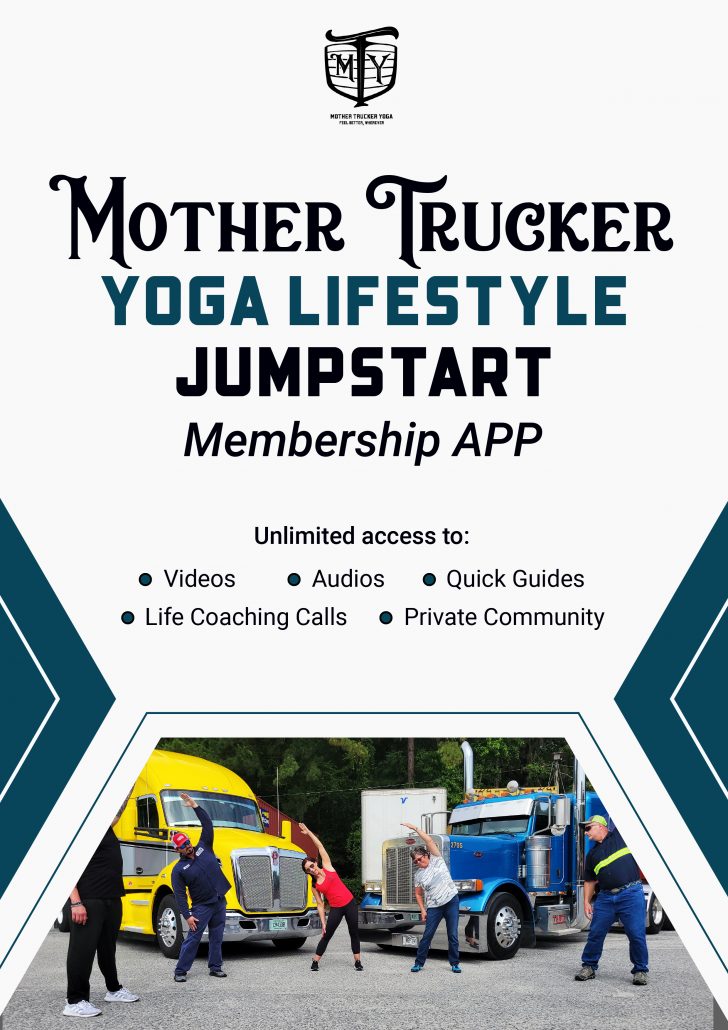
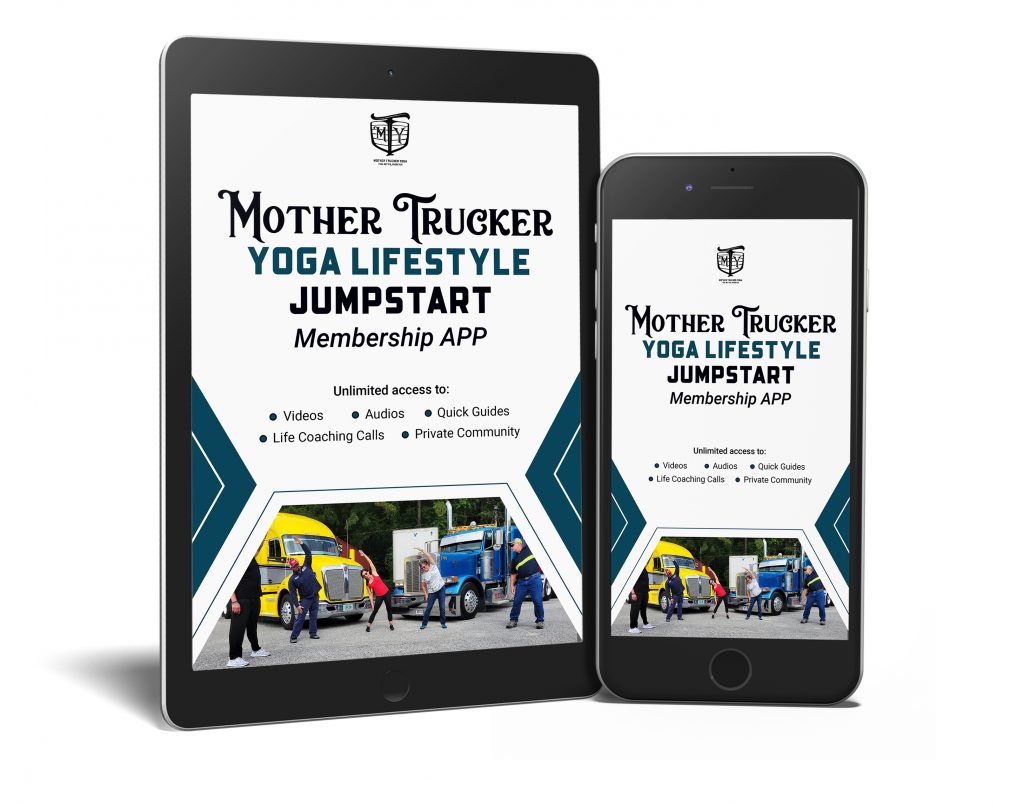
Now hop on over to our amazing Mother Trucker Yoga LIFESTYLE JUMPSTART Membership Platform & APP where you can dive into more great content just like this to better your health starting today!

Try us our for a FREE 30 day with the code: MTY30

Mother Trucker Yoga LIFESTYLE JUMPSTART App and platform image


@MotherTruckerYoga/Blog

@MotherTruckerYoga/Facebook

You May Also Like

Why Stretch Breaks Make Truckers Safer (and 5 You Can Do Anywhere)
Take regular truck driver stretch breaks to stay alert, improve circulation, and reduce fatigue while driving.
👉 Read it here
🔗 FMCSA on driver fatigue and safety


How Posture Affects Driving Safety (and How to Fix It on the Road)
Learn how improving your posture for driving safety reduces back pain and helps you stay focused behind the wheel.
👉 Read it here
🔗 Mayo Clinic on office ergonomics and posture


Aching After a Long Haul? Try These Yoga Moves for On-the-Road Pain Relief
Relieve stiffness and pain with simple yoga for trucker pain relief exercises designed for life on the road.
👉 Read it here
🔗 NIH on yoga for pain management


Stressed Out on the Road? Here’s How Yoga Helps Truck Drivers Stay Calm
Discover how stress relief for truck drivers through yoga techniques can keep your mind and body balanced.
👉 Read it here
🔗 American Psychological Association on stress management

How To Take Care Of Your Mental Health When You Are Out On The Road

As a truck driver, you may feel like you spend most of your time behind the wheel, except for brief interactions at rest stops and destinations. Mental Health


Isolation from one’s social circle is only one component of the whole picture of mental health. And not only for drivers of large trucks, but for everyone. Truck drivers, like those in many other professions, are susceptible to the same factors that might negatively influence their mental health.


It is OK to not feel okay for various reasons, including a lack of physical exercise, loneliness, and stress, to mention a few. While each of these emotions is perfectly acceptable in and of themselves, experiencing them all at once may be overwhelming.


Sometimes, these sensations can grow into anxiety, depression, and other mental health concerns that can quickly go unrecognized — especially if you are the only one looking out for yourself. This is especially true if you are the only one responsible for looking out for yourself. Here, we look at several mental health solutions to help you.

image


How You Can Take Control of Your Stress


The long days and nights may be hard for truck drivers, especially those responsible for traveling great distances because they need to stay awake while driving and fulfill stringent delivery deadlines. The mental and physical effects of stress may hit you all at once when it happens.


It is easy to disregard the warning symptoms of stress and burnout when one’s profession is as demanding as that of a truck driver who has a demanding career.


Nevertheless, focusing on yourself is precisely what you should be doing now. As a truck driver, how do you ensure that you care for your mental health? The following are some helpful suggestions that may be used to take care of oneself on the road.


Exercise


As a truck driver, you can’t get up and move around anytime you want, but moving around at least a little bit every chance you have is critical. Not only can a lack of physical activity contribute to tight muscles, leading to worse aches and pains later on, but exercise is also one of the most essential tools for a healthy mind.


Exercise decreases the stress hormone cortisol. Cortisol is sometimes referred to be nature’s built-in alert system. When you are concerned or worried, your cortisol levels rise.


You could do anything from jumping jacks to pushups at a rest stop, parking lot, or waiting for a load. You can stroll or jog around the parking lot or do some lunges or a decent back stretch.


Keep in touch with loved ones.


When you have been away for so long, it is easy to forget how much family and friends can lift your emotions. 


Making time for a brief phone or video chat when you are not distracted can remind you that your job is not everything, and your vehicle is not the only place you belong. Reach out to those that make you laugh and raise your spirits. 


Even if you cannot spend as much time as you want with friends and family in person, a phone conversation may be just as satisfying.

Trucking Yoga Fitness Mother Trucker Yoga

@MotherTruckerYoga/Blog

@MotherTruckerYoga/Facebook

You May Also Like

Why Stretch Breaks Make Truckers Safer (and 5 You Can Do Anywhere)
Take regular truck driver stretch breaks to stay alert, improve circulation, and reduce fatigue while driving.
👉 Read it here
🔗 FMCSA on driver fatigue and safety


How Posture Affects Driving Safety (and How to Fix It on the Road)
Learn how improving your posture for driving safety reduces back pain and helps you stay focused behind the wheel.
👉 Read it here
🔗 Mayo Clinic on office ergonomics and posture


Aching After a Long Haul? Try These Yoga Moves for On-the-Road Pain Relief
Relieve stiffness and pain with simple yoga for trucker pain relief exercises designed for life on the road.
👉 Read it here
🔗 NIH on yoga for pain management


Stressed Out on the Road? Here’s How Yoga Helps Truck Drivers Stay Calm
Discover how stress relief for truck drivers through yoga techniques can keep your mind and body balanced.
👉 Read it here
🔗 American Psychological Association on stress management

4 Skills Every Trucker Should Have

The trucking industry is often more competitive than people think. There can be a lot of individuals applying for the same preposition. That’s why knowing the skills you need is essential beyond standard driving qualifications

Pexels Source CCO License

Here Are 4 Skills Every Trucker Should Have:

First Aid


First aid could be a critical skill for a truck driver. At this point, you might think, wait, I’m going to be alone for most of the trip. While this is true, it is worth considering what might happen if you end up in an accident. If you have a first aid qualification, you could provide vital support to anyone injured. Don’t forget; this does include yourself. It’s easy to forget that skills in first aid will ensure that you can provide primary care for yourself if you are injured too. You’ll know the proper steps to take. You can learn more about this on sites that offer first aid qualifications. 


Customer Service


You might also want to consider your customer or client service skills. If you are new to the trucking industry it’s easy to assume that there are virtually no interactions with other people. While it’s true that you will spend most of your time on the road, you’ll still interact and engage with clients, customers, or colleagues. These interactions will impact how people judge and view your service. As such, you need to know how to interact with people at your final destination and on the road. Remember, your behavior will permanently alter the perception of the business you’re working for. 


Patience 


You must have patience when you’re a truck driver. There will be many times when you are stuck in traffic or when there are countless factors beyond your control. In times like this, mistakes can and will happen if you are not patient. It would help if you were willing to wait it out and have the mindset that some things can not be changed or fixed by you. This will also help you improve the quality of your driving. 


Mechanical Knowledge


Like first aid, you don’t need this skill as a trucker. But it can be helpful to have. Your employer won’t expect you to have mechanical knowledge, but it’s great if you know a little about how your vehicle works for a few reasons. First, it will ensure that you know the signs there’s a problem with the vehicle, which may mean it’s not safe to drive. Catching these signs early will help you avoid an accident. Second, it can ensure that you know what to do if your truck breaks down at the side of the road and may provide you can get it up and running again without waiting for support. 


We hope this helps you understand some of the skills you should have as a truck driver. By learning these skills, you can ensure that you are more likely to be hired for a position. You will also be more effective in any trucking job that you are chosen for.


Trucking Yoga Fitness Mother Trucker Yoga

SHOP MTY

You May Also Like

Why Stretch Breaks Make Truckers Safer (and 5 You Can Do Anywhere)
Stretch breaks are essential for truckers to reduce fatigue, improve alertness, and lower accident risk by keeping muscles and mind active.
👉 Read More
🔗 For further reading, check out “How Stretching Improves Your Trucking Performance” from Highway Driver Leasing. Highway Driver Leasing


Beat Trucking Fatigue: Simple Yoga Tools to Improve Sleep for Drivers
Practicing simple yoga and sleep hygiene helps truck drivers overcome fatigue, improve sleep quality, and perform safely behind the wheel.
👉 Read More
🔗 External resource: “Driver Fatigue on the Job” from CDC NIOSH about managing fatigue and sleep risks. CDC


The Mental Load of Trucking: How Yoga Supports Mental Health for Truckers
Yoga offers powerful tools to reduce stress, relieve anxiety, and support emotional wellbeing for drivers dealing with the mental load of life on the road.
👉 Read More
🔗 For related insights, see “Sleep Resources” from CDC Sleep. CDC


The Ultimate Truck Driver’s Guide to Managing and Relieving Back Pain Naturally
Addressing back pain naturally through posture, movement, and mobility routines can help truck drivers stay healthy, comfortable, and pain-free.
👉 Read More
🔗 See “The Top 10 Stretches for Truck Drivers to Keep Their Bodies Pain-Free on Long Hauls” from AllComIns. AllCom Insurance

How Can I Control My Anxiety?

If you are dealing with anxiety, it’s easy to feel things spiraling out of control. After all, one anxious thought often leads to another, creating a vicious cycle of negative thinking that can be hard to pull away from. However, it’s important to note that there are specific steps you can take to better handle the situation.

For example, you could: 

Set aside some time to ‘worry.’ Spending hours every day worrying is not a good use of time – nor is it productive. This is because it often stands in the way of you making positive changes to improve the situation you’re worried about in the first place. However, sometimes, worries can consume our every waking moment. One way to reduce this is by setting aside a little time to ‘worry’ about something. For example, if an anxious thought enters your brain, give yourself five minutes to worry about it. Then, take a deep breath and think about what you’re going to do to resolve it. 


Consider taking supplements or gummies. In some cases, supplements and gummies can be a great, natural way to ease anxiety. For example, Delta 9 THC Gummies contain premium, dispensary-grade THC, a product used in wellness treatments for centuries. In addition to boosting your mood, it could also help you to deal with the physical symptoms of your anxiety, such as muscle ache, pain, and tension. However, as a CDL Professional Driver, be mindful that some companies do not permit the use of CBD products, and many CBD companies cannot guarantee 100% certainty that their products are THC free and not all products are created equal. Always proceed cautiously and consult a well-educated wellness professional or your primary care doctor before taking any new supplements. 


Get excited about exercise. Regular exercise is more than just a step on your health journey. It can also help with anxiety. This is because working out boosts your body’s production of mood-boosting endorphins. As a result, it’s essential that you commit to a regular exercise schedule. If you find it hard to maintain exercise motivation, branch out by trying various activities until you find one you truly love. Here at Mother Trucker Yoga, we believe in starting small and focusing on consistency. Remember, effective workouts can exist out of the gym, whether you join a local sports team or take up running.

How Can I Control My Anxiety? Mother Trucker Yoga Trucker Yoga Image

Give yourself a break. Another way to reduce anxiety is by letting go of perfectionism and giving yourself a break. Remember that taking time off from work and social activities is okay, especially if this time will allow you to take better care of your mind. In most cases, taking a break gives you a chance to clear your mind, process what you are going through, and even help you find a quick solution to your problems. Taking a break also involves ensuring that you get plenty of sleep.


Speak to someone. Opening up to your friends and family or even a professional is one of the most effective ways to combat stress and anxiety. This is because having someone listen to you proves you are not alone. This can help the entire situation seem much more manageable. Talking out loud also helps us to better process our emotions and feelings. Finally, speaking to others means they can share tips, tricks, and coping mechanisms with you that can make a real difference in how you approach your anxiety moving forward. 

@MotherTruckerYoga/Blog

@MotherTruckerYoga/Facebook

You May Also Like

Why Stretch Breaks Make Truckers Safer (and 5 You Can Do Anywhere)
Take regular truck driver stretch breaks to stay alert, improve circulation, and reduce fatigue while driving.
👉 Read it here
🔗 FMCSA on driver fatigue and safety


How Posture Affects Driving Safety (and How to Fix It on the Road)
Learn how improving your posture for driving safety reduces back pain and helps you stay focused behind the wheel.
👉 Read it here
🔗 Mayo Clinic on office ergonomics and posture


Aching After a Long Haul? Try These Yoga Moves for On-the-Road Pain Relief
Relieve stiffness and pain with simple yoga for trucker pain relief exercises designed for life on the road.
👉 Read it here
🔗 NIH on yoga for pain management


Stressed Out on the Road? Here’s How Yoga Helps Truck Drivers Stay Calm
Discover how stress relief for truck drivers through yoga techniques can keep your mind and body balanced.
👉 Read it here
🔗 American Psychological Association on stress management

Sportswear Is The Ideal Summer OOTD Every Day

The summertime brings hot and uncomfortable weather. Some of the materials you have in the winter are too heavy and designed to keep the heat in. While flowing dresses and lightweight linens are a great choice, the right sportswear can make you comfortable, cool, and sweat-free all summer. 


Activewear is typically stretchy and has a range of other perks designed for those who are going to be active and sweat. By choosing the right activewear (outside of regular cotton legging and a t-shirt), you might find this summer much easier to deal with – along with some healthier food options and plenty of water. 


Is cotton the best summertime wear?

Cotton has a range of skin-friendly benefits; it might not be the best option for you throughout the summer. 


Let’s say you have to run errands all day, it’s already hot at 6 am, and you have a day filled with school drop-off and pick-up, groceries, picking up the gifts for a party at the weekend – and that’s just the start of it. 


Those cotton clothes, even if they are leggings and a tank top, will go through a lot. One of the downsides of using cotton clothing for sweltering days is that it isn’t moisture-wicking. Cotton holds onto the sweat and keeps it close to the skin. 


Suppose the cotton clothing is damp but isn’t well fitted. In that case, it can cause heat rash, rub the skin, and be uncomfortable. Shop active clothing made with some of the suggested materials below to avoid this. 


So how do you choose the right sportswear? 

Fit

Depending on your confidence levels, you might often choose clothing that isn’t well-fitting, which will mean you might be uncomfortable throughout the day. As you sweat, you are more likely to have an issue with chaffing and becoming uncomfortable in the heat. 


Sportswear is designed from fabrics that offer some stretch but are mostly tightly fitted to the body. This means you can move comfortably and are less likely to have chaffing. 


Versatility 

No matter what you are doing, there are colors and fabrics to complement your day. The softer materials designed for busy days but just as easy are ideal for yoga, can be quickly layered and are versatile enough to last your whole day. 


To make your wardrobe even more versatile, try to choose colors that work well together, so when you need to leave at speed, you can put on what you need and head out for your day. 


For the base layer, try to choose a moisture-wicking layer to remove any sweat from the skin. A looser cotton jumper is excellent for areas where the evenings get a little chilly. 


Comfort 

If you struggle to feel comfortable in the heat, the last thing you need is material that isn’t soft and comfortable. Fabrics that are made up of plastics or have any rubber aren’t breathable, which means that you will sweat a little bit more than usual, and it will not be able to escape the body. 


These materials also increase your body temperature, causing you to sweat more and become more quickly dehydrated. Choose lightweight fabrics that mention they are breathable in the description. 


Wicking

You might’ve seen the words moisture-wicking on some clothing descriptions. That means that the moisture you produce will be removed from the body when you sweat. Nothing is worse than having to wear sweat-soaked clothing all day when you are busy and have things to do. 


Moisture-wicking fabrics work in two ways. First, they quickly move moisture away from the body, which is the wicking part. The second part of the process is that the fabric’s outer surface dries quickly, so the wearer never gets wet and the material doesn’t become saturated. 


Anti-odor

If you are prone to sweating a lot but know you won’t be able to head home to change your clothing until the evening, it is best to choose an anti-odor fabric. While sweat itself doesn’t smell, it doesn’t take long for multiple layers of sweat to happen. Our sweat feeds our skin bacteria, which rubs back onto our clothing, which causes the smell. 


Gym clothing also has other benefits, like antibacterial, ultra-breathable, and support areas. Performance activewear often has a combination of the above great features. 


And those are just a few reasons sportswear makes the ideal summertime clothing! Of course, once you have your activewear on, you might as well fit in a workout too! 

Mother Trucker Yoga T-Shirts

@MotherTruckerYoga/Blog

@MotherTruckerYoga/Facebook

You May Also Like

Why Stretch Breaks Make Truckers Safer (and 5 You Can Do Anywhere)
Take regular truck driver stretch breaks to stay alert, improve circulation, and reduce fatigue while driving.
👉 Read it here
🔗 FMCSA on driver fatigue and safety


How Posture Affects Driving Safety (and How to Fix It on the Road)
Learn how improving your posture for driving safety reduces back pain and helps you stay focused behind the wheel.
👉 Read it here
🔗 Mayo Clinic on office ergonomics and posture


Aching After a Long Haul? Try These Yoga Moves for On-the-Road Pain Relief
Relieve stiffness and pain with simple yoga for trucker pain relief exercises designed for life on the road.
👉 Read it here
🔗 NIH on yoga for pain management


Stressed Out on the Road? Here’s How Yoga Helps Truck Drivers Stay Calm
Discover how stress relief for truck drivers through yoga techniques can keep your mind and body balanced.
👉 Read it here
🔗 American Psychological Association on stress management

 Can’t Sleep? Top 3 strategies for better sleep for truck driver health 

 Are you getting enough sleep at night? Do you have trouble staying focused during the day? Not having quality sleep can result in worsened health, and it’s as simple as it sounds. Your cognitive functions, ability to stay alert, assess situations, and handle stress are health qualities that are important in many professions, especially truck driver health and those who have long stressful work shifts. So if you’re suffering through bad nights of sleep, we’ve got you covered with our three strategies for better sleep for truck driver health.

Top 3 strategies for better sleep for truck driver health 

  1. Enforce a sleep schedule.

Your brain requires 7-8 hours of sleep to perform its duties efficiently. Usually, you wouldn’t need more than 8 hours in bed to be fully recharged and ready to go. So how do I enforce a sleep schedule on myself for truck driver health

Now for a person with a typical job, I recommend that they go to bed and wake up at the same time every day. However, if you are a truck driver working long late-night hours, these naps are necessary to cover your sleep debt. Try to minimize the time difference on weekends so your body can get used to a consistent and healthy sleep-wake cycle. Eliminate daytime naps as they interfere with your sleep cycles and impact overall agility. 

I understand the above might not work for most drivers. So you have to get creative and try to find some consistency. If your driver time is all over the place, what about your sleep schedule can you be consistent with. Not having screen time 15 – 30 minutes before bed, exercising and getting movement in, not eating a heavy meal before bed, and listening to a relaxing meditation help you relax before bed. Aromatherapy to relax, all of these things can help you get the sleep you need despite your erratic schedule.

sleep schedule mother trucker yoga blog

Pay attention to what you eat and drink.

Here’s the thing: your body has an intimate relationship with everything you eat and drink, so no wonder these habits may leave you restless throughout the night. It would help if you didn’t go to bed hungry or stuffed. 

Avoid having heavy meals right before bedtime as the discomfort may keep you up. Having a snack before rest is wonderful, so long as you are away from highly energizing meals or meals with foods that require a lot of digestion power.

Here are eight foods and drinks to consider before bed if you need that quick snack:

  1. Almonds.
  2. Turkey. Turkey is delicious and nutritious.
  3. Chamomile tea.
  4. Kiwi.
  5. Tart cherry juice.
  6. Fatty fish.
  7. Walnuts.
  8. Passionflower tea.

As for drinks: alcohol, nicotine, and caffeine are not your friends. Stay away from beverages that include any of these if you want to have a good night of sleep. Alcohol may leave you feeling drowsy but will disturb you later in the night. Alcohol can also lead to weight gain, other health issues, and other truck driver health issues. Consider drinking in moderation and never when it would cause problems while out on the road. 

 Nicotine is a stimulant, much like caffeine, and will keep you awake when your body heavily needs sleep. You may want to remember that cigarettes introduce nicotine to your system and keep you awake. If you can’t fall asleep, look at your smoking habits. 

Create a calming environment

Here’s the strategy that will certainly help you wind down before bed. Turn off light-emitting devices like phones and TVs at least an hour before the time you intend to sleep. Create an ideal space for sleeping soundly. 

Pick up reading, writing in journals, taking a bath, or listening to calm music with earbuds to relieve stress. The blue light emitted from these disrupts the sleep-wake cycle of the brain. This is important to note as a truck driver’s health is tied to stressful environments.

Every driver needs to find time to take a break, even if it’s a mini-break, to refuel and recharge your body and mind.

Light some scented candles for relaxing effects or leave the room pitch black, whatever fits you best. Make sure your room is the right temperature and comfortable. Don’t lie in bed awake if you can’t sleep within the next twenty minutes. Read or listen to slow sleep-inducing music until you’re fast asleep.

Conclusion:

We have crafted this blog just for you, and if you follow the strategies we’ve mentioned above, you will achieve an A1 truck driver’s health, especially in terms of sleep. With these three strategies for better sleep, you will experience a change; you’ll find yourself at peace and better equipped to do your truck driving duties.


Better sleep for truck driver health is essential and within reach for any driver with just one of the strategies above. But if you are looking for more sleep strategies, support, and driver wellness help, check out our NEW Mother Trucker Yoga LIFESTYLE JUMPSTART Membership Platform & APP. 

You can join for 30 days FREE using the code: MTY30

Mother Trucker Yoga LIFESTYLE JUMPSTART App and platform image

You May Also Like

The Health Benefits of Cinnamon and How to Travel with It
Discover how cinnamon can naturally boost circulation, balance blood sugar, and make your travel days healthier with these simple tips.
👉 Read More
🔗 Learn more about cinnamon’s benefits from Medical News Today.


Reducing the Risk of Stroke for Truck Drivers
Learn the key lifestyle changes truck drivers can make to lower their stroke risk and stay safe behind the wheel.
👉 Read More
🔗 For more insights, check out CDC: Stroke Prevention.


The Remarkable Benefits of Beets for High Blood Pressure and Other Natural Remedies
Explore how beets can help lower blood pressure through their natural nitrates and antioxidant content, plus simple ways to include them in your diet.
👉 Read More
🔗 Also see “A New Way to ‘Beet’ High Blood Pressure?” from Harvard Health. Harvard Health


High Blood Pressure – Foods to Avoid for Better Health
Take control of your health on the road by knowing which foods worsen high blood pressure and what to eat instead.
👉 Read More
🔗 See additional guidance from the American Heart Association.


Facing Back Pain and Stretching: 7 Effective Fixes for Driver Fitness 

Facing Back Pain and Stretching: 7 Effective Fixes for Driver Fitness 

Traveling can be a fun experience if you lead a busy lifestyle. It means you’re going out to meet family after a long time, going wherever the road takes you, and a lot of time to stop and admire the moment alone. But if back pain comes knocking, everything is turned upside down. It can ruin the simplest moments of joy, and if you’re someone who drives for a living, it can make your life miserable. Back pain can be triggered by sitting in the driver’s seat and being unable to stretch for a more extended period. Thankfully, due to modern science, many pain relief creams can be applied externally to help fight back pain.

This article will cover some ways to reduce back pain on the road!

How to Avoid Back Pain? 7 Easy Tips

Use Supports

Creating lumbar support can be quite a relief, and it doesn’t need to be complicated. You can roll a towel and place it against your back to give you the support your hurting back needs. Our favorite here at Mother Trucker Yoga is BackShield (Use code: MTY10). BackShield is perfectly designed with a driver’s most significant needs in mind. 

BackShield is a unique tool to use when facing back pain. There are many reasons for this one-of-a-kind product created to help our customers experience relief from back pain. It is unlike any other product for back support on the market. The BackShield assists in supporting the spine’s natural curvature and works—unlike cushions, beads, and different variations of back support on the market. This is the product drivers, and office workers have been waiting for! Grab yours and let us know what you think!

Move Your Seat Forward

Moving your seat forward can force you out of slouching or awkward lending position as there isn’t too much space between your chest and the steering wheel. It also helps relax your feet from the pedals, which can alleviate pain, when your seat is too far back, the muscles in your leg strain more to keep constant pressure on the pedals and can also leave your arms at an unnatural height and position, causing aggravating shoulder, neck, or when you might be facing back pain. 

Backshield - seat for truck drivers

Use Pain Relief Creams

While it is not advised to be on medicinal drugs, pain relief creams can step in as a major lifesaver. These creams are produced to delve deep into your skin and reach the muscles that are stressed and causing back pain. It is an effective and quick fix for all truck drivers. If you haven’t yet checked out STIFF Mother Trucker pain relief cream, what are you waiting for? We uniquely crafted this pain cream with 12 all-natural ingredients six active ingredients (most name brand creams only have 1-2) so you can get relief fast. 

Stretch Your Body

Whenever you get the break, taking time to stretch your body can do wonders to reduce your back pain. Being cramped in awkward spaces for long durations can increase stress in your muscles, and that can improve your health problems. By 20, we lose about 10% of our flexibility every decade. It might be time to stretch. Stretching doesn’t have to mean you are in yoga pants or own a yoga mat. It’s simple moves you can do right from the driver’s seat when you have just a few minutes to find relief. That’s all it takes. Twist your torso, roll your neck, ankles, and wrists, arch your back. All these moves add up and impact your health when done regularly and adequately. Check out Mother Trucker Yoga LIFESTYLE JUMPSTART Membership Platform and APP to get instant access to our driver-focused content so you can keep on moving. (Use the code: MTY30 for a free 30-day trial).

Mother Trucker Yoga LIFESTYLE JUMPSTART App and platform image

Change Your Steering Wheel Grip

Due to the additions of airbags, holding the steering wheel by ten o clock and two o clocks is outdated. Now specialists suggest that you have the steering wheel by nine o clock and three o clock, which allows you to rest your elbows on the armrests, which helps support your spine, reducing back pain. Next time you are at the wheel, check your elbows. Remember: relax the elbows, so they drip down, then slide your shoulders down your back as well—ah, relief. 

Heat Your Seats

If the option is available, heating your seats can be a blessing in disguise. The heat applied will release tension from the body, and the release can remove any signs of an ache in your body. Plus, warm muscles move better, which is a benefit as well. Many people reportedly turn their seat heaters on if they feel any form of ache in their muscles or back.

Use Ice Packs

If you have an immediate injury or strain, consider using ice right away to help reduce inflammation from the body fast. In contrast, you can use ice packs to reduce the inflammation on your back and numb the region so you can’t feel any pain. There are many ice packs available in stores that you can take on your travels and alternate between, making it a relatively accessible option for the truck drivers who need it most. 

Conclusion

Facing back pain on the road is not as easy of a task as it would seem, but our guide to help you might step in just when you need it. Stretching and pain relief creams are amongst many effective ways to deal with a poor lumber position, and for your truck driver’s health, this guide tells you all that you need to know!

You May Also Like

Stressed Out on the Road? Here’s How Yoga Helps Truck Drivers Stay Calm
Explore how yoga for truck driver stress relief helps reduce anxiety, promote mental clarity, and support long-haul resilience.
👉 Read it here
🔗 Also see “Get Your Yoga On: Mindful Movement to Reduce Stress for Professional Drivers” from Women in Trucking about using yoga as a stress-reduction tool. womenintrucking.org


Beat Trucking Fatigue: Simple Yoga Tools to Improve Sleep for Drivers
Learn how simple yoga routines and better sleep hygiene can help truckers reduce fatigue and improve rest on long haul routes.
👉 Read it here
🔗 See “Sleep Quality of Heavy Vehicles’ Professional Drivers,” a recent study exploring drivers’ sleep quality, daytime sleepiness, and risks of poor sleep health. SpringerLink


Summer Fitness on the Road: 5 Quick Routines for Hot Days
Stay active in the heat with quick, effective routines for strength, cardio, and flexibility tailored for trucking life in summer.
👉 Read it here
🔗 Check “Outdoor Workout Exercises: Your Guide for the Summer” from Benchmark Physical Therapy for tips to safely exercise outdoors in warm weather. BenchMark Physical Therapy


Stretching Essentials for Truckers: Prevent Stiffness on Long Hauls
Discover essential stretches designed to keep truckers mobile, reduce stiffness, and ease discomfort during long driving days.
👉 Read it here
🔗 For related guidance, see “6 Fun Outdoor Summer Workouts” by Muscle & Fitness featuring movement routines that support flexibility and mobility. Muscle & Fitness

Be a Happier Driver: 10 Ways Being Thankful Impacts Mental Health

“I think the first question we should ask ourselves is “what IS gratitude”? When you look up the definition it talks about kindness, but to me what is most important is gratitude is the act in which we “return” kindness. Be a Happier Driver

10 Ways Being Thankful Impacts Mental Health

Gratitude is what keeps the cycle of kindness going.

It not only returns the favor to the giver of kindness, but it can transfer it to the next in line. It makes me think of the concept of Random Acts of Kindness, which are really gifts to someone new in the form of kindness that one was shown from another. Gratitude keeps us in that cycle of kindness towards one another. And when we step out of that cycle that is typically when you see people start to only think of themselves. Where the mountains in their own lives get too high to see over or even look back from and kindly help another up. And that not only affects their health but those around them as well. 

An article from VeryWellMind noted that “gratitude is a positive emotion that involves being thankful and appreciative and is associated with several mental and physical health benefits. When you experience gratitude, you feel grateful for something or someone in your life and respond with feelings of kindness, warmth, and other forms of generosity.

They went on to say: “In general terms, gratitude stems from the recognition that something good happened to you, accompanied by an appraisal that someone, whether another individual or an impersonal source, such as nature or a divine entity, was responsible for it,” explain researchers Lúzie Fofonka Cunha, Lucia Campos Pellanda, and Caroline Tozzi Reppold in a 2019 article published in the journal Frontiers in Psychology.”

What kinds of cycles are you caught up in? It might not be so bad to adopt this one.

This is where meditation comes in.

Meditation calls time out on us wherever we are in life to gain perspective, insight, and foresight. Meditation doesn’t necessarily change our lives, but rather changes our perspective on them and while we are currently in them. All the way down to our heart rate, our breath, and how we feel the feeling we currently have present in our bodies. 


As someone who has survived a life strangling eating disorder and several mental health obstacles, meditation and yoga allowed me to see that I wasn’t the only one. To see despite my own mountains, I could still offer a handout. And when I did, something magical happened…I felt good. And when I felt good, I wanted to do good. It made me more grateful and focused on the good rather than derailed and dismantled by the mountains. 


But unlike most. To me, meditation isn’t just sitting on a cushion for 20 minutes in a quiet room for 20 minutes twice a day. Meditation is the simple act of paying attention. Think of meditating in Times Square (pre-COVID). The busyness all around you and you standing still and observing. Not affected by the smells, sounds, sensations, or sights. You just take it in and appreciate it all. Notice it all, and notice your place in it all. Where instead of reacting, you are being present which will positively impact mental health.

So many of us are REACTING to life and that is because we are not in the moment, we are not practicing gratitude and this idea of a living meditation. We react when we are focused too much on the future and obsessing about the past. Your health is living proof of what being grateful and thankful can do for your life.

Try this:

A way to get back into the present moment is to take 30 seconds and mentally go through everything and everyone you can possibly think of and offer them a moment of gratitude. Feel it, see it, send it. Just like taking your medicine, this is your mental medicine.

So don’t just close yourself off in a room to practice meditation. See mediation as an opportunity to practice being present in your everyday life and that experience of being present will offer you the opportunity to practice gratitude through random acts of kindness. How? Because now you are more aware of the opportunities to do so. 

Be a Happier Driver: 10 Ways Being Thankful Impacts Mental Health health image

The health benefits of positive thinking and being thankful

Increased life span. Lower rates of depression. … Better cardiovascular health and reduced risk of death from cardiovascular disease and stroke. Reduced risk of death from cancer.

The Mayo Clinic did research and discovered that positive thinking and gratitude create a great life!

Researchers continue to explore the effects of positive thinking and optimism on health. They found health benefits that positive thinking may provide include:

  • Increased life span
  • Lower rates of depression
  • Lower levels of distress and pain
  • Greater resistance to illnesses
  • Better psychological and physical well-being
  • Better cardiovascular health and reduced risk of death from cardiovascular disease and stroke
  • Reduced risk of death from cancer
  • Reduced risk of death from respiratory conditions
  • Reduced risk of death from infections
  • Better coping skills during hardships and times of stress

You don’t need to be a yoga person, a spiritual guru, or go to church every day to practice the art of gratitude and thankfulness. Try it out for a few days and notice how you feel. It’s hard to be angry when you are offering out thanks. When you shift gears mentally you can impact mental health immidately.

For another Daily Dose of Hope check out the Mother Trucker Yoga LIFESTYLE JUMPSTART Membership Platform & APP where you get access to Hope regularly alongside health and fitness-focused videos, audios, and downloads to help you get the most of out of your day, every day!

Try us free for 30 days with the code: MTY30


Mother Trucker Yoga LIFESTYLE JUMPSTART App and platform image

@MotherTruckerYoga/Blog

@MotherTruckerYoga/Facebook

You May Also Like

Stressed Out on the Road? Here’s How Yoga Helps Truck Drivers Stay Calm
Explore how yoga for truck driver stress relief helps reduce anxiety, promote mental clarity, and support long-haul resilience.
👉 Read it here
🔗 Also see “Get Your Yoga On: Mindful Movement to Reduce Stress for Professional Drivers” from Women in Trucking about using yoga as a stress-reduction tool. womenintrucking.org


Beat Trucking Fatigue: Simple Yoga Tools to Improve Sleep for Drivers
Learn how simple yoga routines and better sleep hygiene can help truckers reduce fatigue and improve rest on long haul routes.
👉 Read it here
🔗 See “Sleep Quality of Heavy Vehicles’ Professional Drivers,” a recent study exploring drivers’ sleep quality, daytime sleepiness, and risks of poor sleep health. SpringerLink


Summer Fitness on the Road: 5 Quick Routines for Hot Days
Stay active in the heat with quick, effective routines for strength, cardio, and flexibility tailored for trucking life in summer.
👉 Read it here
🔗 Check “Outdoor Workout Exercises: Your Guide for the Summer” from Benchmark Physical Therapy for tips to safely exercise outdoors in warm weather. BenchMark Physical Therapy


Stretching Essentials for Truckers: Prevent Stiffness on Long Hauls
Discover essential stretches designed to keep truckers mobile, reduce stiffness, and ease discomfort during long driving days.
👉 Read it here
🔗 For related guidance, see “6 Fun Outdoor Summer Workouts” by Muscle & Fitness featuring movement routines that support flexibility and mobility. Muscle & Fitness

What Truck Drivers Need to Know About CBD

Emerging studies on the long-term effects of common prescription drugs (e.g. painkillers, corticosteroids) have raised significant public interest in natural alternatives to conventional medicine. Everything from turmeric capsules to essential oil-infused topical balms are now commonplace in American homes, and understandably so. However, it’s safe to say no natural compound has skyrocketed in popularity quite like cannabidiol, more commonly known as CBD.

edited_What Truck Drivers Need to Know About CBD plant mother trucker yoga blog

What is CBD?

CBD is one of several chemical compounds found in the cannabis plant. CBD is the primary cannabinoid in non-psychoactive varieties of cannabis, such as hemp. It is distinguishable from tetrahydrocannabinol (THC) in that it does not impair judgment or motor function as a side effect, which is commonly known as a “high.” CBD is currently being studied for a range of potential health benefits, which will be discussed in the next section.


There are plenty of different CBD products available today, including oils, tinctures, capsules, and edibles. You can also buy CBD concentrates — which are made from pure CBD extract — or isolates, which are CBD extracts with all other cannabis compounds removed entirely. Isolates come in both oil and powder forms; uses of CBD isolate powder include infusion into everything from smoothies to DIY soap bars.


So what can CBD do for you? In this post, we go over how CBD can benefit a large number of prospective users, as well as whether or not it’s right for truck driver health in particular.


A Look at The Scientific Literature

CBD has been shown to reduce the severity of symptoms of disorders characterized by chronic anxiety, mood disorders and seizures. It is also being studied for its role in relieving associated conditions of common diseases such as persistent nausea or dizziness from cancer treatment, mood swings from Alzheimer’s disease, muscle spasticity from multiple sclerosis or tremors from Parkinson’s disease.


Perhaps the most notable and well-documented aspect of CBD’s therapeutic potential is its natural anti-inflammatory and analgesic properties. It can be used as an add-on or supplementarily with conventional therapies and medications for a variety of chronic pain conditions including fibromyalgia, back pain and migraines. Users also report significant relief from chronic inflammatory disorders such as arthritis and gout. Truck driver health issues like these are very common.


How exactly does it work?

CBD is one of several cannabinoids whose effects are derived from their interaction with the endocannabinoid system (ECS). The ECS is a network of receptors categorized into groups; the cannabinoid-type 1 (CB1) and cannabinoid-type 2 (CB2) receptor groups are the most relevant. These receptor groups are primarily located in the nervous system, peripheral organs, and immune system.


The observable therapeutic effects are rooted in its modulatory influence on CB1 and CB2 receptors, which can positively affect the body’s sensitivity, uptake, and response to hormones (e.g. serotonin, dopamine) and neurotransmitters (e.g. cytokines, prostaglandins) which have beneficial implications on everything from pain or anxiety disorders to recurring sleep dysfunction.


Given its significant number of health-positive properties, lack of psychoactivity, and legal status across the United States, CBD has become incredibly popular among consumers from a variety of walks of life. However, it isn’t entirely without risks or downsides for truckers, which we’ll briefly go over below.


Should You Take CBD?

There’s a risk that these products could raise a red flag on an employer’s drug test for controlled substances. This is due to THC’s schedule I drug classification under the DEA’s drug scheduling system. Although CBD enjoys legal status across all 50 states at present, it still is a component of the cannabis plant, so less sophisticated test kits could detect it or other secondary cannabinoids as a false positive.


As of this writing, it’s not recommended to supplement with CBD without consulting your employer about it directly. After doing so, be sure to use only the isolates form. With all other cannabis cannabinoids, terpenoids and flavonoids removed, isolates significantly reduce the chances of a problematic drug test.


When Would CBD Be Right for You?

To completely avoid the risk of drug test issues, it might be best to avoid supplementation altogether until after retirement. Our Stiff Mother Trucker Pain Relief Cream or Mini Acupressure Ball are examples of safe, risk-free options for managing pain. For inflammation, sleep dysfunction or tremors, there are also market alternatives to CBD. When it comes to truck driver health issues it’s important to play on the side of safety and never put your career on the line. 

edited_What Truck Drivers Need to Know About CBD STIFF Mother Trucker Marc Springer CBD

CBD is increasingly well established as a natural compound with impressive therapeutic potential. However, it isn’t without its risks in terms of workplace drug tests. Be sure to do your due diligence to find out if CBD supplementation is right for you.

You May Also Like

The Health Benefits of Cinnamon and How to Travel with It
Discover how cinnamon can naturally boost circulation, balance blood sugar, and make your travel days healthier with these simple tips.
👉 Read More
🔗 Learn more about cinnamon’s benefits from Medical News Today.


Reducing the Risk of Stroke for Truck Drivers
Learn the key lifestyle changes truck drivers can make to lower their stroke risk and stay safe behind the wheel.
👉 Read More
🔗 For more insights, check out CDC: Stroke Prevention.


The Remarkable Benefits of Beets for High Blood Pressure and Other Natural Remedies
Explore how beets can help lower blood pressure through their natural nitrates and antioxidant content, plus simple ways to include them in your diet.
👉 Read More
🔗 Also see “A New Way to ‘Beet’ High Blood Pressure?” from Harvard Health. Harvard Health


High Blood Pressure – Foods to Avoid for Better Health
Take control of your health on the road by knowing which foods worsen high blood pressure and what to eat instead.
👉 Read More
🔗 See additional guidance from the American Heart Association.

Mental Health Awareness Month: Take A Breath Driver

Breathing is one of those things we all do, yet we rarely think about it; when a system like the respiratory works without us having to think about it or make it happen, it’s called “involuntary.”

The respiratory system has the unique ability to work all on its own without our help, unlike the muscular system, which works voluntarily.

This month is Mental Health Awareness Month and it’s a perfect time to tune in and tap into how powerful our breath actually is.

When we breathe, we get this precious gift called life.

Did you know?

We can survive 21 days without food, seven days without water but can only go one to three minutes without oxygen.

And at the 60-second mark, brain cells are already dying.

Yet after 20 years of teaching yoga to others, there is one thing I have come to find, many do not like to breathe.


I would often notice few would appreciate the art of breathing practices (pranayama) in yoga. You could see people start to fidget, become distracted, and even get annoyed at the idea that they weren’t “doing anything” during their yoga class. Yet without the ability to breathe, nothing on the yoga mat would even be possible. With May being mental health awareness month let’s take a few minutes today to focus in on simple strategies you can add to your daily routine today that cost you nothing and take minimal time and effort. 

It’s time you learn to breathe to improve your truck driver’s health!

Breathing is a tool. Those that learn to harness the device and tap into its vast abilities to improve, help and even heal the body get to reap the benefits of increased vitality, health, and happiness. But time and time again, I have observed others choose pills, alcohol, and even violence to manage what we all call stress or our emotions rather than tap into this tool we are all born with and have access to us at any given time. 

Stress can alter just about any system in the body if we allow it to. 

Stress management sign mother trucker yoga blog

Stress can:

  • Raise our blood pressure
  • Increase our heart rate
  • Increase our body temperature
  • Leave us in physical pain
  • Can decrease our immune system
  • Give us stomach discomfort
  • Make it difficult to sleep
  • Can affect your libido 
  • Tense your muscles 
  • Cause weight gain 
  • Burden your nervous system
  • Leave shallow breathing

When is the last time you felt the effects of any of the above and thought you should practice deep breathing? 

When my oldest son was small, and he’d get stressed out, the first thing I would have him do is deep breathing. Three deep breaths, I’d say, and we’d do them together. He’s now nearly a teenager, and I have observed him repeatedly defaulting to deep breathing when he is stressed, angry, frustrated, or can’t sleep. He automatically uses this incredible tool we all walk around with every day but rarely tap use voluntarily. 

The average American breathes with less than 18% of their lung capacity. That’s what I like to call clavicle breathing. It’s no wonder we are a stressed-out, upset, unhealthy out touch society. I say these are the very things I have felt before yoga and learning how to tap into my breathing. And the same things I think when I’m not in my body, using my breathing, and feeling grounded in my skin. 

How do we breathe?

The average person takes about ten breaths per minute; that’s an average of 22,000-24,000 breaths per day. That’s a lot of breathing. And when we breathe, we inhale necessary oxygen and exhale carbon dioxide and toxins that our body wants to remove. When we breathe, our lungs expand and take in air, and our diaphragm lowers and expands as well, taking in oxygen to then be distributed out to the millions of cells throughout our body that need that fresh oxygen to live. 

Dr. James Hoyt, a pulmonologist, says, “Our respiratory muscles don’t have the luxury of being out of shape.” Yet how many people can say with certainty that they use them, work them, build them like their bicep regularly? There is a saying, “use it or lose it,” and it fits here with our breathing. 

 A recent study in the Journal of Neurophysiology may support this, revealing that several brain regions linked to emotion, attention, and body awareness are activated when we pay attention to our breath.

And, also nearly every system in the body is connected to our respiratory system or breathing. 

  • Our metabolism increases when we practice deep breathing.
  • Our autonomic nervous system regulates when we deep breathe.
  • Our digestion can settle and improve when deep breathing.
  • Our muscles relax and get total oxygen, helping them not to cramp.
  • Our lymphatic systems become stimulated, hand and hand, with our immune system, both stimulated when we breathe.
  • Our body is fully oxygenated when we deep breathe.

And one of our deep breathing’s most impressive features is that it stimulates our vegas nerve. 

What is the vagus nerve?

The vagus nerve is the longest of the cranial nerves, extending from the brainstem to the abdomen through multiple organs, including the heart, esophagus, and lungs.

It controls the parasympathetic nervous system (PNS), which contains your relaxation response. Most people never breathe deep enough to stimulate this impressive nerve.

We need the vagus nerve to be alive and working because the vagus nerve controls your mood, heart rate, digestion, and immune response. Stimulating your vagus nerve can help to regulate many functions in your body.

Vagus nerve stimulation has been linked to treating epilepsy, improving digestive conditions, reducing inflammation, and managing anxiety disorders.

The journal Frontiers in Neuroscience reported in 2018 that the poor function of the vagus nerve could lead to mood and anxiety disorders. But most importantly, when you stimulate the vagus nerve, you can reduce anxiety, stress, and mood disorders. All of this can happen when you learn to breathe more deeply and more often. 

WAKE UP, PEOPLE! BREATHING IS FREE!!!!!!!!!!!!!!!

Where does your breathing fall?

Clavicle Breathers: 

Those that breathe only into the upper chest, throat, and shoulders. These breathers often have lifted shoulders and a tense neck. 

Chest Breathers: 

Those that breathe into the center of the chest. 

Abdominal Breathers: 

Those that breathe deep into the belly and feel their lungs and abdomen expand freely. 

We have forgotten our unique ability to help and heal ourselves. When you were a baby, no one had to tell you how to breathe, yet there you were, breathing so deeply that your entire torso was expanding and contracting every breath you took. I have listened and watched my children as infants, and now adolescents get upset and even cry only to default to their breathing to calm them down. It’s in you; you have done it; you have just forgotten how to do it. 

Deep Abdominal Breathing Technique:

This is the perfect technique to try for Mental Health Awareness Month.

  1. Sitting tall or lying down comfortably, place one hand on your belly and one hand on your heart/chest. 
  2. Exhale completely through your mouth and hear your breath move out of your body. 
  3. Inhale through your nose move your breath deeply into your lower hand (belly) and feel it expand. Continue to move your breath up to notice your upper hand (chest) rise. 
  4. Exhale slowly move the air out, feeling your belly collapse and your chest lower (in any order). 
  5. Soften your jaw and relax your body, focus on fully emptying your belly when you exhale, and fully expand when you inhale. 
  6. Work yourself up towards a count of four counts on the inhale and eight on the exhale. 
  7. Repeat this for two to five minutes. 
  8. Anytime your mind wanders, bring it back to your breathing. 
  9. Allow yourself to hear your breath each time you inhale and exhale. 

How to do deep abdominal breathing

To improve your truck driver health, continue this practice daily in the morning to wake up, when you are feeling stressed, waiting in traffic (minus the hands-on your body), or before you go to sleep to help you relax. 

You have tools to help you breathe, relax, fall asleep. The real question is, are you using them? 

Take inventory since it’s mental health awareness month, how is your breathing?

Deep Abdominal Breathing Benefits:

 Various deep abdominal breathing forms have been linked to cardiovascular benefits, including increased blood flow and improved blood pressure. Deep breathing is also a helpful tool for relaxation and sleep. Taking deep breaths can also help you manage stress and improve cognitive function like brain fog and lack of focus and concentration.

If every tool you are reaching for is outside of yourself, let me ask you, have you tried the tools you were born with? The tools you were given and are the very tools that make this life possible? The tool I am talking about is your breathing. 

Try This:

For one week, practice deep abdominal breathing at least one time a day. Work to practice it at the same time each day. Set the alarm on your phone or in your calendar and make it a priority. All too often, we say something doesn’t work or help, and we have never really tried it, let alone given it the attention required to see results. 

Trucking yoga can be as simple as paying attention to your breathing. Truck driver health does not need to be complicated. And you benefit from it the most!

After seven days, come back and let us know how you did. What changed, what you noticed or found. Every month can be mental health awareness month, don’t let your mental health slip away.

Now take a deep breath and start living! 

Mother Trucker Yoga LIFESTYLE JUMPSTART App and platform image

Resources:

https://greatergood.berkeley.edu/article/item/what_focusing_on_the_breath_does_to_your_brain

https://www.uchealth.org/today/understanding-breathing-and-the-importance-of-taking-a-deep-breath/

https://www.healthline.com/health/facts-about-stress#25.-Past-experiences-can-cause-stress-later-in-life

https://pubmed.ncbi.nlm.n

https://www.consumerreports.org/mental-health/ways-to-manage-stress/ih.go

You May Also Like

Stressed Out on the Road? Here’s How Yoga Helps Truck Drivers Stay Calm
Explore how yoga for truck driver stress relief helps reduce anxiety, promote mental clarity, and support long-haul resilience.
👉 Read it here
🔗 Also see “Get Your Yoga On: Mindful Movement to Reduce Stress for Professional Drivers” from Women in Trucking about using yoga as a stress-reduction tool. womenintrucking.org


Beat Trucking Fatigue: Simple Yoga Tools to Improve Sleep for Drivers
Learn how simple yoga routines and better sleep hygiene can help truckers reduce fatigue and improve rest on long haul routes.
👉 Read it here
🔗 See “Sleep Quality of Heavy Vehicles’ Professional Drivers,” a recent study exploring drivers’ sleep quality, daytime sleepiness, and risks of poor sleep health. SpringerLink


Summer Fitness on the Road: 5 Quick Routines for Hot Days
Stay active in the heat with quick, effective routines for strength, cardio, and flexibility tailored for trucking life in summer.
👉 Read it here
🔗 Check “Outdoor Workout Exercises: Your Guide for the Summer” from Benchmark Physical Therapy for tips to safely exercise outdoors in warm weather. BenchMark Physical Therapy


Stretching Essentials for Truckers: Prevent Stiffness on Long Hauls
Discover essential stretches designed to keep truckers mobile, reduce stiffness, and ease discomfort during long driving days.
👉 Read it here
🔗 For related guidance, see “6 Fun Outdoor Summer Workouts” by Muscle & Fitness featuring movement routines that support flexibility and mobility. Muscle & Fitness